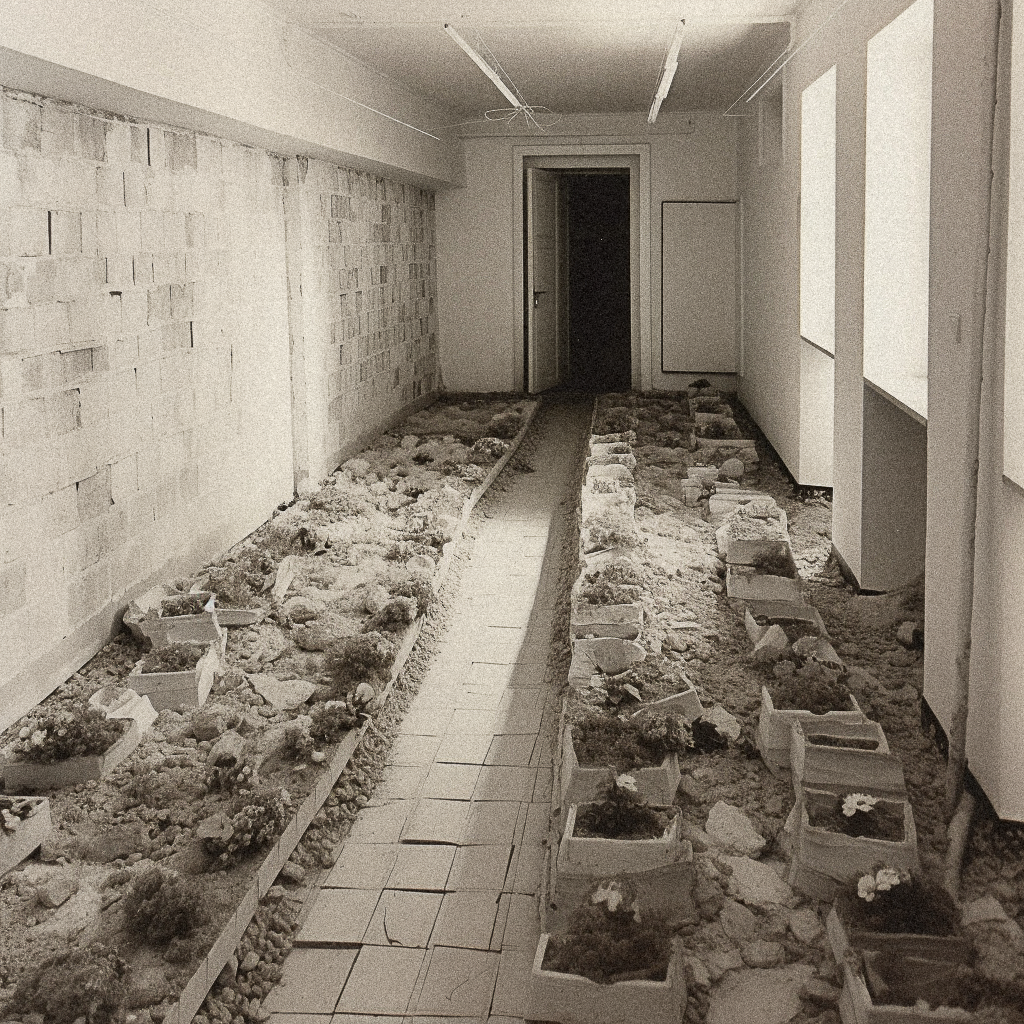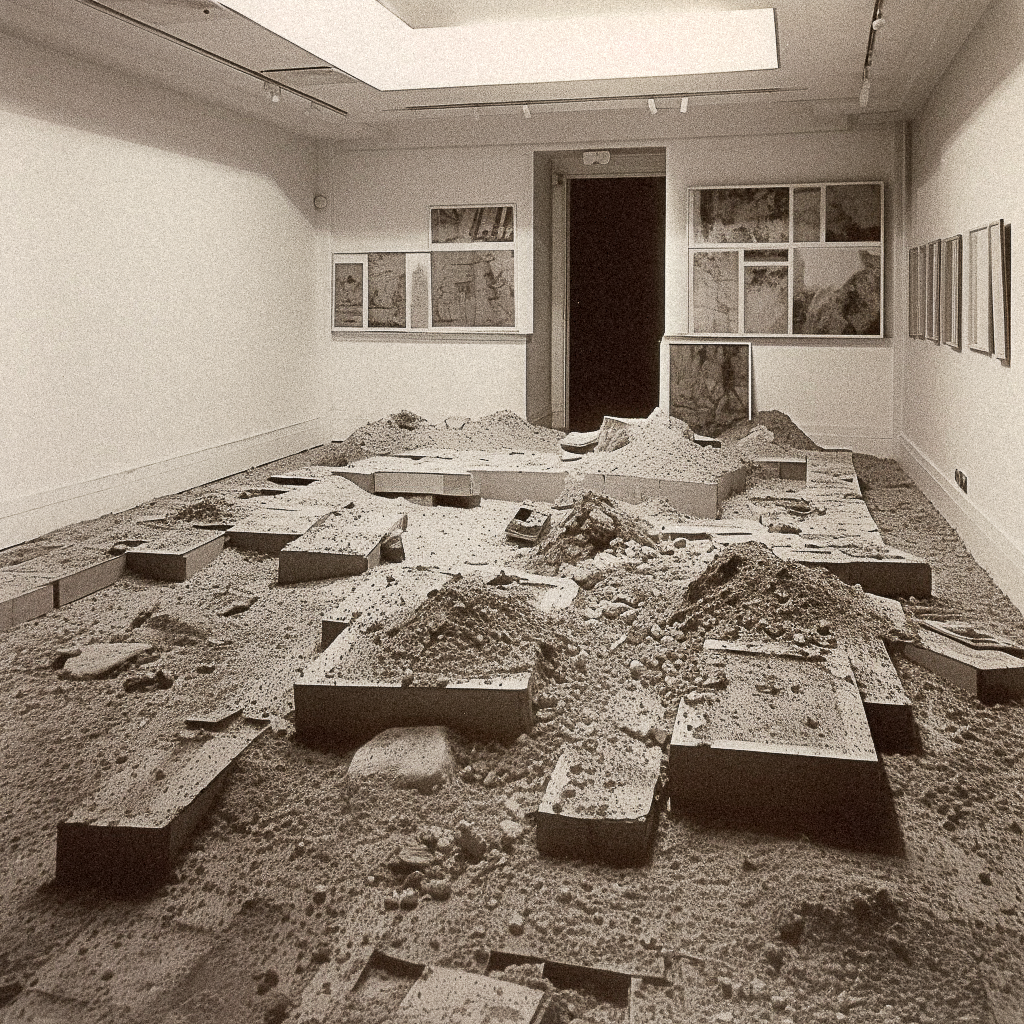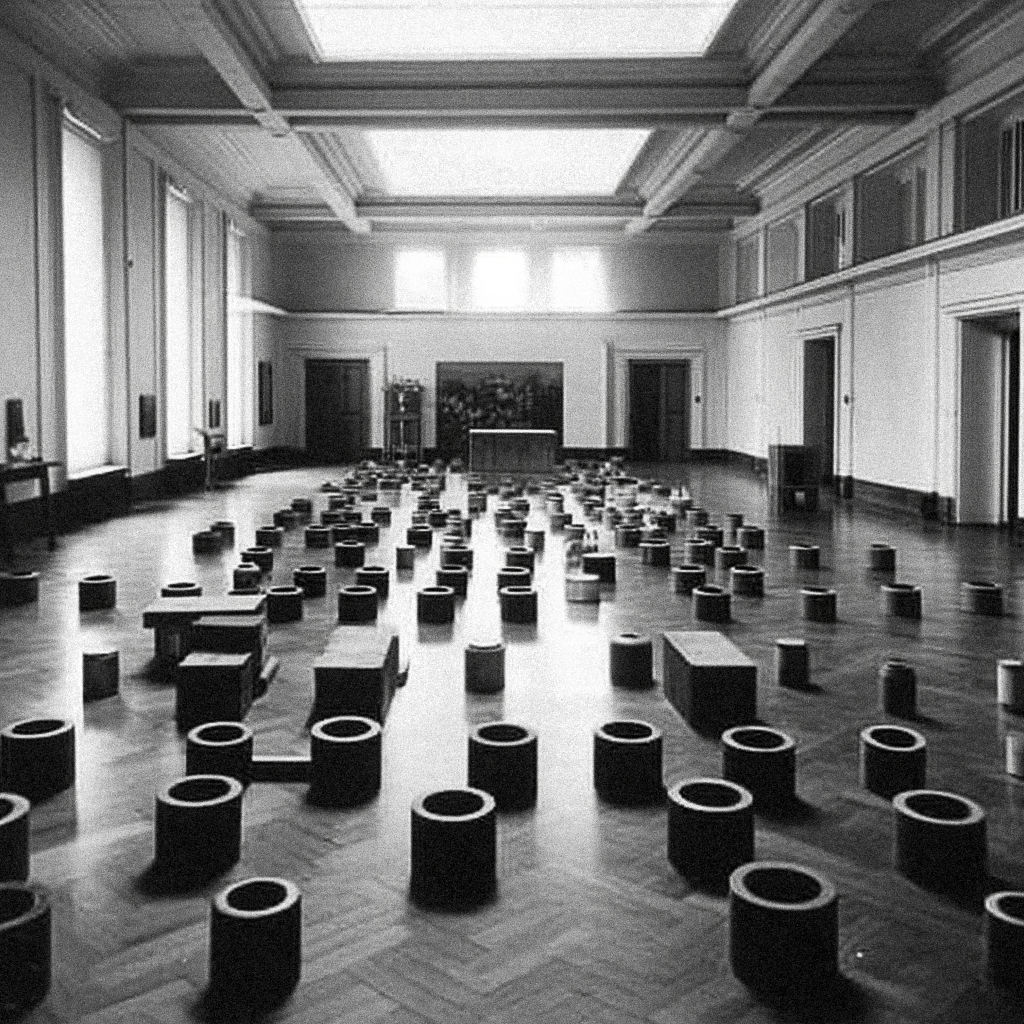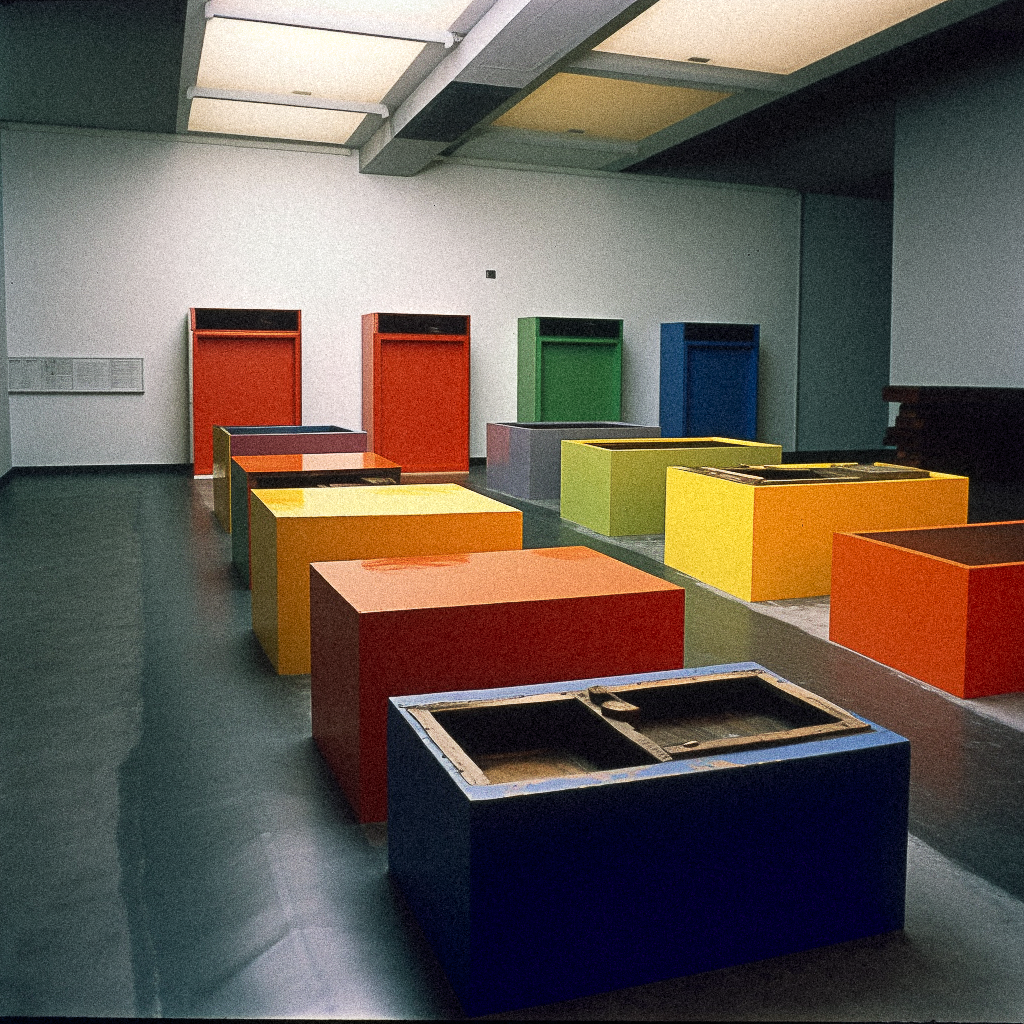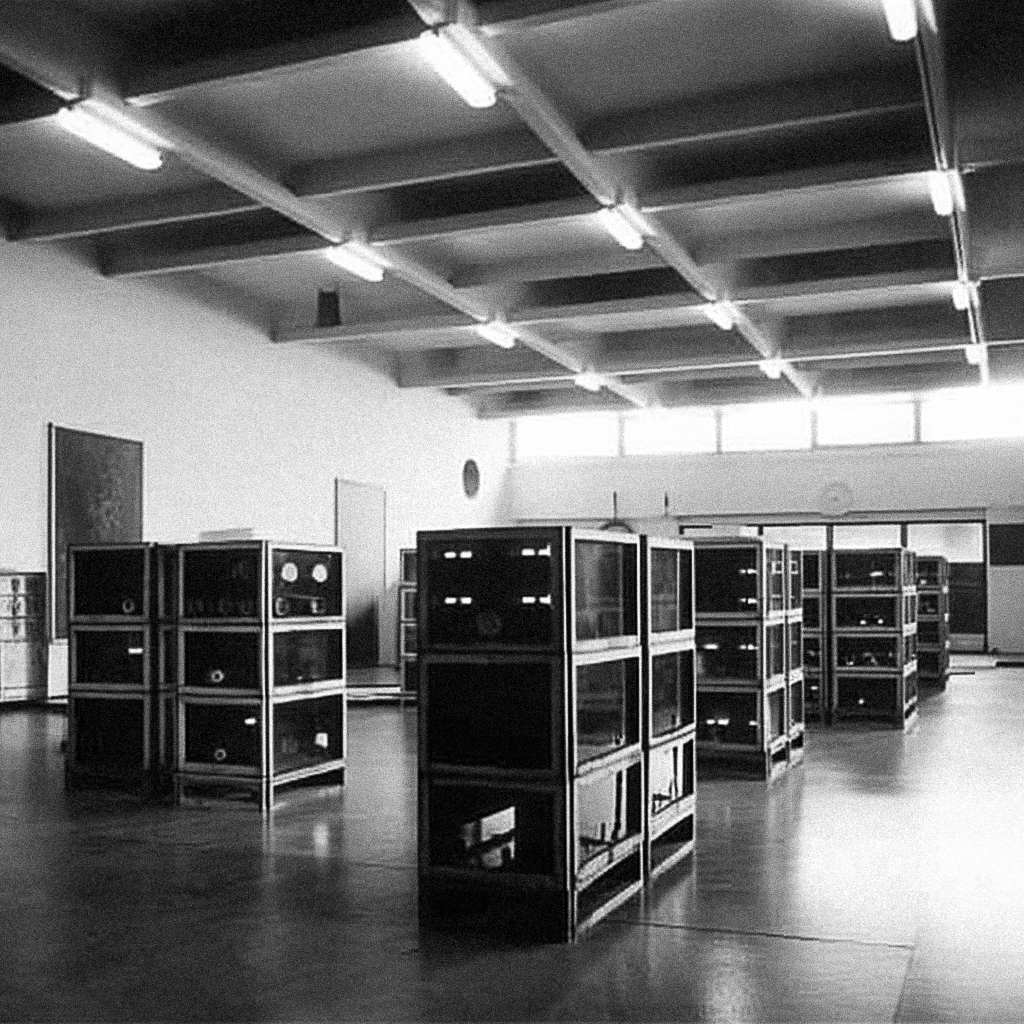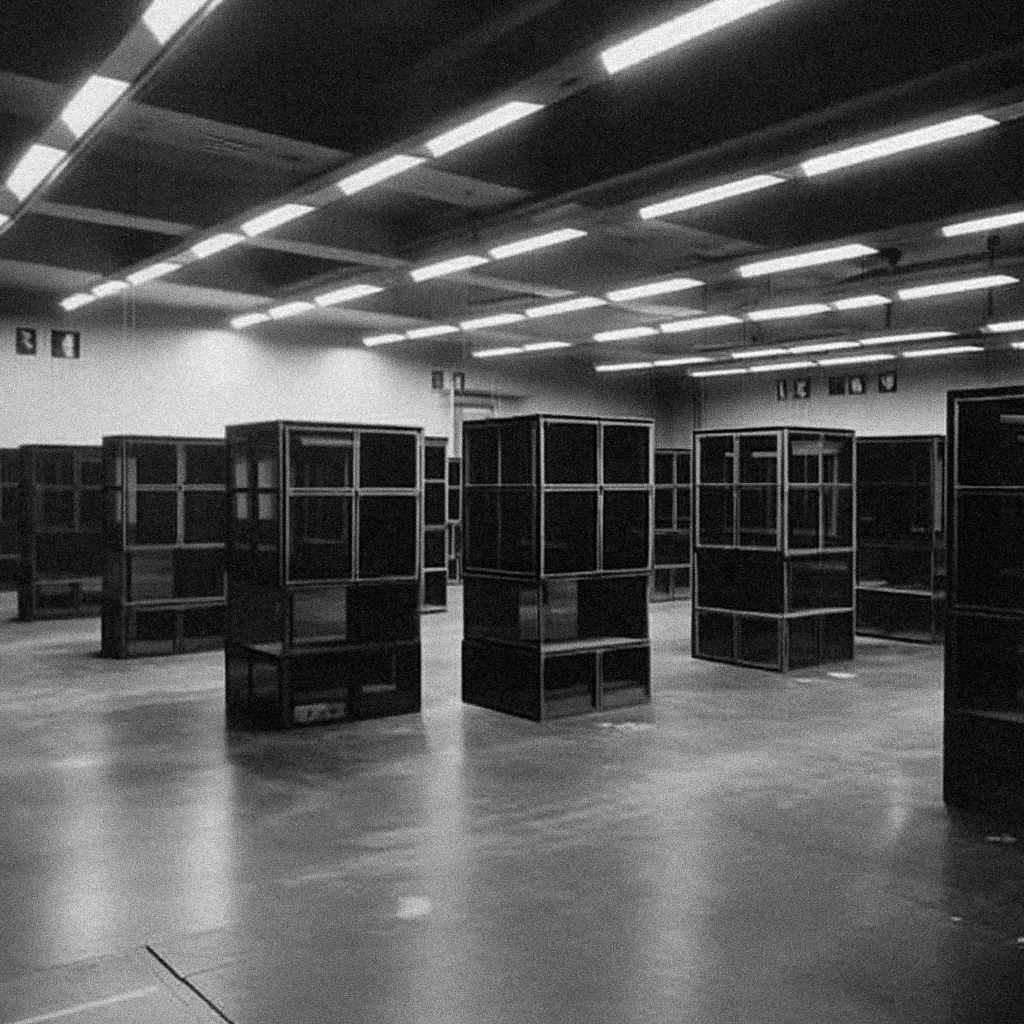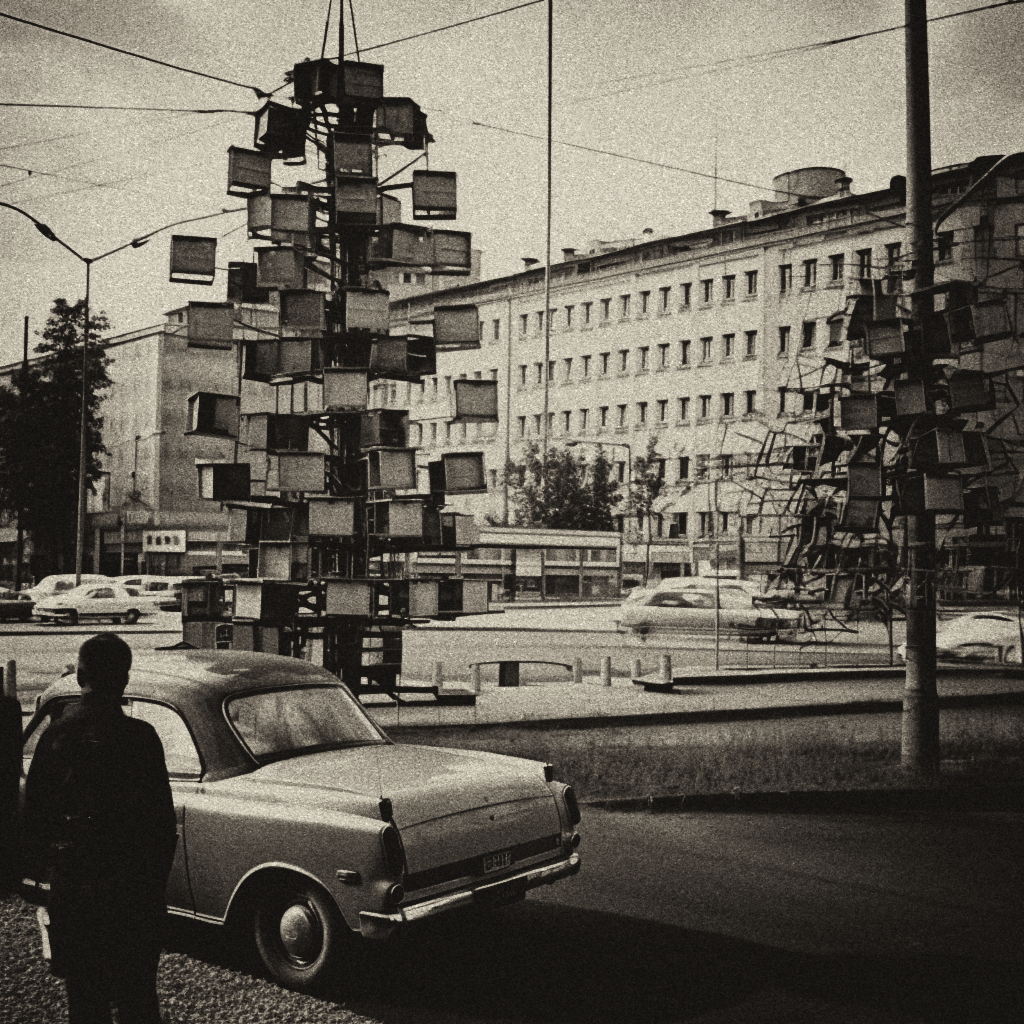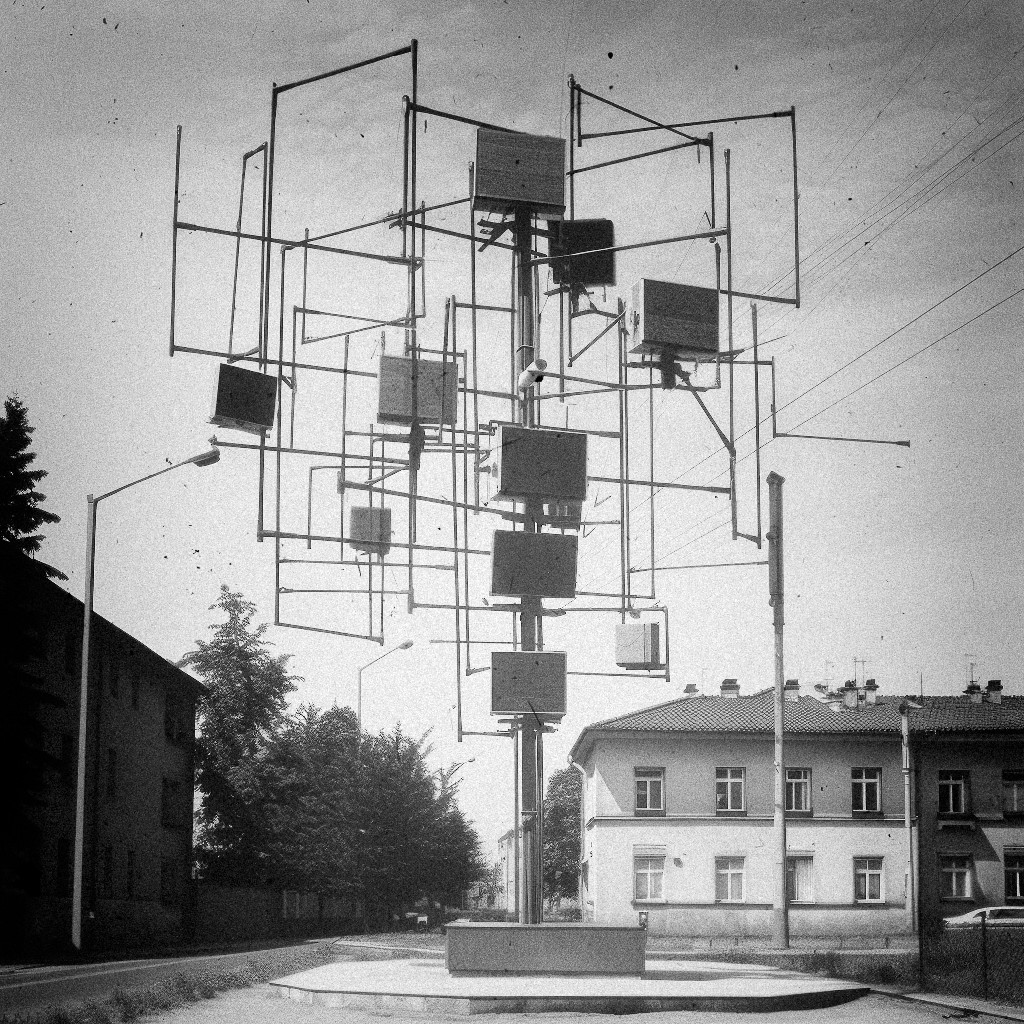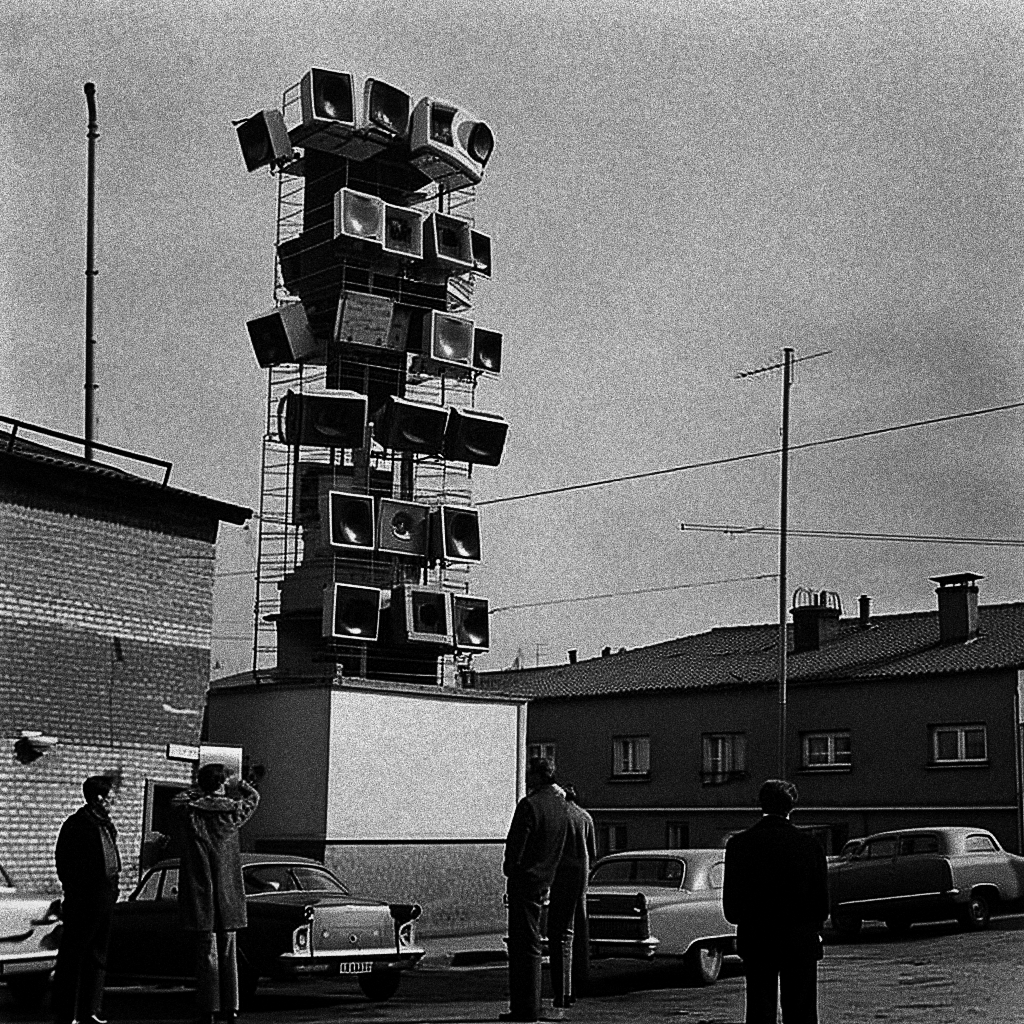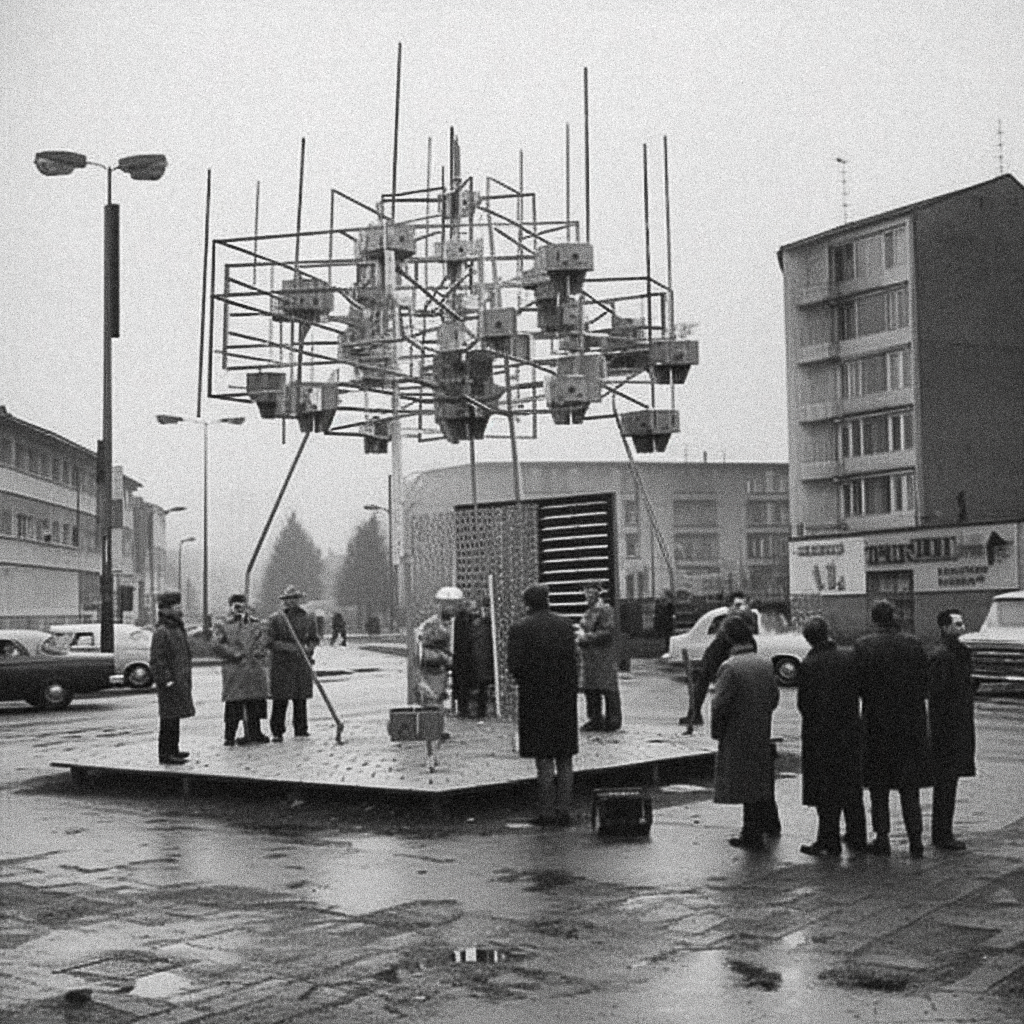
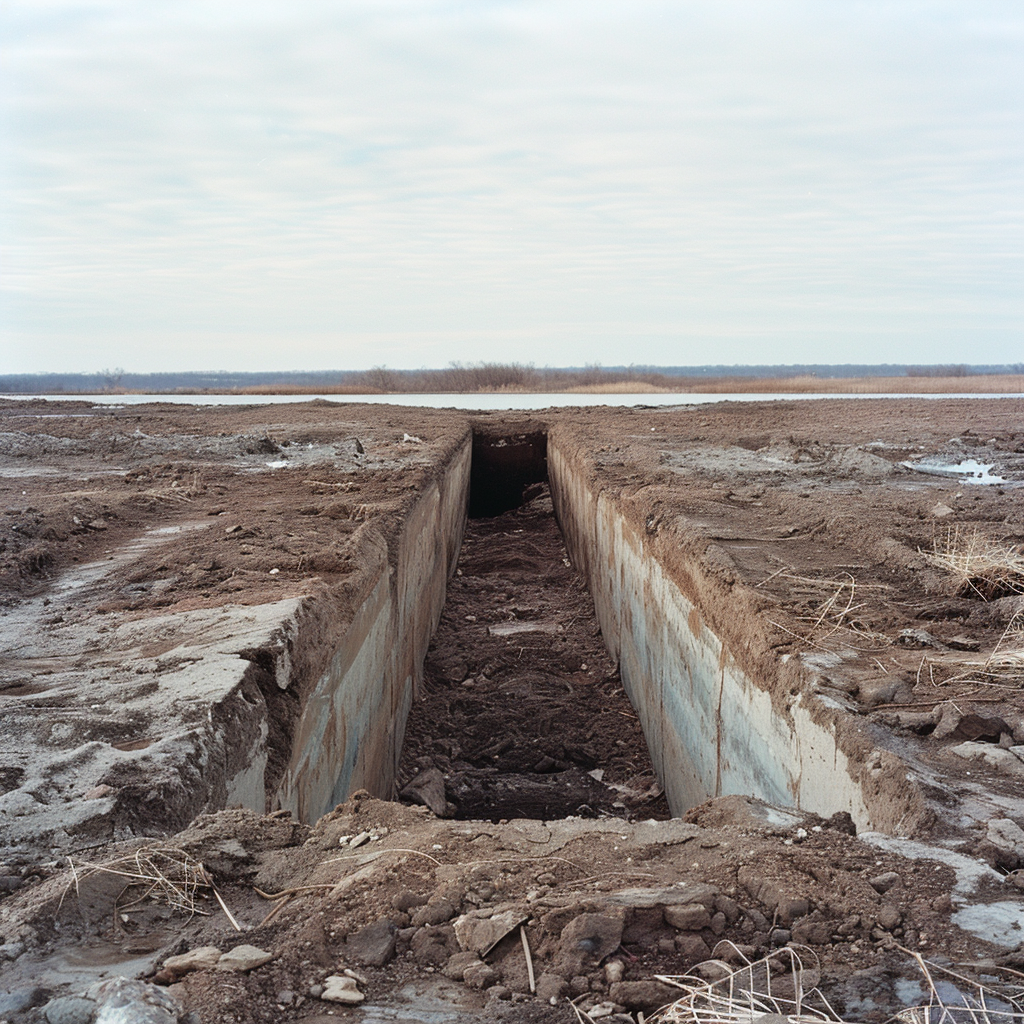

On the State of Things at varnelis.net

This year I am writing much more. I did not set out with another broken promise about writing more. I just started to. It’s curious—when I aimed to write just one essay per month, as I did last year, the task felt daunting. Yet now, averaging one essay a week, I have established a rhythm. The process feels easier. The more I write, the more energized I become, and new ideas emerge readily. I have at least eight essays in the works now—for the Florilegium, on AI and art, on the fate of network culture. The rhythm of regular practice sustains itself.

My friend Adam Greenfield recently articulated a similar sentiment on his Patreon:

Maybe it’s simply the onset of British Summer Time overnight, but I’m just bursting with energy. I know it seems incongruous with the ambient psychic weather of the moment, but then maybe that’s the point? To meet the grim farce of mainstream public affairs with an upwelling, irrepressible, literally insurgent joy? To keep at it, generating connection and possibility and the conditions of life, until the very moment the choice to continue doing so is in one way or another taken out of your hands. There are worse programs to commit oneself to, you know? (link)

Well said. My recent pace of writing starkly contrasts with my paralysis during the first Trump administration. Although I had quit full-time teaching in 2015 to focus on writing and art practice—and despite a wildly successful 2016 highlighted by the Detachment exhibit in Vilnius—after the election, I stumbled. For three years, I barely wrote, turning inward instead, absorbed by the restoration of our house. Then, just as I laid plans for a new push, COVID hit. My reserves were already empty and another year was lost. Those years betrayed the promise I had made to myself when stepping away from teaching—to finally bring forth the work I had long conceived but never had time to produce. I had all the time in the world and what came out of it? This hiatus nearly ended my career. I had surrendered to circumstance, letting external forces dictate my creative life. But in the unexpected and renewed face of a new Trump regime, I have a different response this time: “What do we say to the God of Death? Not today.” As Adam suggests there’s true power in meeting grim circumstances with “insurgent joy” generating possibility, not just watching as “the darkness drops again.” And so, onwards.

You should subcribe to Adam’s Patreon. It’s good. We disagree on some things, like the state of AI today, but we agree on many others. Discourse, dialogue, and debate are what we need today, not arm-waving from censors and hard liners of all stripes. As Yeats also observed in “The Second Coming,” we cannot allow a situation where “the best lack all conviction, while the worst are full of passionate intensity.”

Another essay comes out tomorrow.

The City and the Fog

I’ve been reading Joan Didion again. She was one of the sharpest chroniclers of the recent past and a master of minimalist style. Legend has it that Bret Easton Ellis, still in high school, copied Slouching Towards Bethlehem by hand (or maybe on a typewriter) to absorb the rhythm of her sentences.

Unlike Didion, I never expected to spend a decade in California, but when I did, she became a kind of spiritual guide. Lately, I’ve been wondering—who is doing for contemporary California what Didion once did? Who is writing about the AI wars, polycules, crypto, billionaire Gavin Newsom, tech-bro culture, or last year’s hard shift to the right in Silicon Valley? If such a voice exists, I haven’t heard it yet. Perhaps, amid fragmented media and algorithmically shaped narratives, the kind of clarity Didion provided is no longer achievable. Maybe, with the collapse of journalism, it’s not even possible anymore.

So last night, as an experiment, I asked the newly released GPT-4.5 to write a piece on the present day in Didion’s voice. The result was too brief, so I had Claude 3.7 expand it. Then I fed the longer draft back into GPT, refining it piece by piece—GPT, it turned out, had the better ear for her style. I edited out some, but not all, of the hallucinations, asking GPT-4.5 to rewrite the worst offenders. After all, in Slouching Towards Bethlehem, Didion wrote, “The point of my keeping a notebook has never been, nor is it now, to have an accurate factual record of what I have been doing or thinking. That would be a different impulse entirely, an instinct for reality which I sometimes envy but do not possess.”

I considered keeping it to myself or sharing it only with a few friends, but maybe others would find it interesting—or at least useful in some way. Perhaps it will bring nothing but opprobrium. After all, this veers closer to the AI-as-“plagiarism-machine” argument its critics make, but there is something about this particular experiment that resonates with me. If AI is nothing more than a prediction machine, then perhaps it’s fitting that it captures the contours of a world increasingly governed by vibes, memes, and the inertia of accumulated narratives.


The fog moves as it always has, unhurried, insistent, swallowing the Golden Gate Bridge one rivet at a time until nothing remains but the memory of steel and ambition. San Francisco in March is a city between seasons, between ideologies, between versions of itself. The light falls differently now. The voices in the street carry a new tenor. The city is holding its breath.

From the window of a hotel suite on the thirty-fourth floor of the Four Seasons, I watch the fog erase and reveal the city below. Market Street runs like a fault line, dividing more than just geography. Seventeen floors beneath me, my rental car sits in a parking garage. I have not slept in thirty-six hours. The minibar contains small bottles of vodka and gin, their presence a comfort I choose not to indulge. Not yet.

I have come to San Francisco to observe a transformation, or maybe a regression—a city once synonymous with progressive ideals now shifting under the weight of its own contradictions. The disruptors, having lost control of their narrative, have found themselves disrupted.


“The problem with San Francisco,” Jonathan Reed tells me over lunch at Quince, “is that it forgot what made it great in the first place.”

He cuts into a perfectly seared scallop, the gesture deliberate, his Patek Philippe catching the light. “It wasn’t tolerance or inclusivity that built this city. It was ambition. The gold rush. People willing to risk everything for the chance at something better.”

Reed is forty-seven, lean in the way that suggests an optimized lifestyle. As a venture capitalist with over two billion in assets under management, he has funded startups that changed how we communicate, how we travel, how we understand ourselves. From his South Park office, he looks down on the same streets where Jack Dorsey once contemplated human connection in 140 characters. Now Reed contemplates a different kind of revolution.

“We’re the new forty-niners,” he says, the smile practiced, “but we’re mining for something more valuable than gold. We’re mining for freedom.”

I ask what freedom means to him.

“Freedom from overregulation. Freedom from a tax code that punishes success. Freedom from a culture that cares more about policing speech than encouraging innovation.” He pauses, measuring his words. “I didn’t vote for Trump in 2016 or 2020. Most of us didn’t. But something changed. We looked around and realized the progressive policies we supported were destroying the environment that allowed us to succeed.”

The restaurant is filled with others like Reed—tech executives and investors, dressed in casual luxury, speaking in the clipped, assured tones of men who expect to be heard. At a table nearby, the founder of a cryptocurrency exchange under SEC investigation raises his glass in silent acknowledgment. We met once, at a conference in Austin, where he declared California “functionally dead” to an audience that laughed knowingly. Now he has returned, a prodigal son to the city he publicly renounced.

“The right started speaking our language,” Reed continues. “Innovation. Deregulation. Meritocracy. Meanwhile, the left became hostile to the very concept of achievement. It wasn’t a sudden conversion. It was a gradual realization that our interests had realigned.”

I ask about Elon Musk, now heading the Department of Government Efficiency—DOGE, an acronym presumably chosen for its resonance with cryptocurrency enthusiasts and meme culture.

Reed’s expression shifts. “Elon is… complicated. Brilliant, no question. But his approach at DOGE has been…” He searches for the right phrasing. “Let’s say scattershot. Another rocket explosion this week. Agencies gutted without clear plans for replacement. It’s creative destruction without the creative part.”

The news feeds have been filled with footage of the latest SpaceX failure—a Starship test vehicle disintegrating over the Gulf of Mexico, raining debris onto protected waters. Environmental groups are already filing lawsuits.

“But Peter’s doing well,” Reed adds, meaning Peter Thiel. Palantir has secured a series of lucrative government contracts since the inauguration. Surveillance, border security, administrative “efficiency”—Thiel’s reach now extends into every department Musk is “streamlining.”

I ask about the social implications of this realignment.

Reed’s expression hardens. “I’m not responsible for fixing society’s problems. I create jobs. I generate wealth. I fund innovations that improve lives. Isn’t that enough?”

The question lingers in the air, unanswered.


The Presidio offers a different perspective—manicured nature, military precision. Once a Spanish fort, then an American base, now a national park, it stands as a monument to San Francisco’s cycles of conquest and reinvention. Trump has spoken of turning it into a Freedom City, one of ten proposed metropolises meant to embody a new vision for America.

It is here, in a converted barracks overlooking the bay, that I meet Emily Sanchez.

Sanchez does not match the image conjured by “Trump supporter.” She is thirty-five, Mexican-American, Stanford-educated, with a resume that includes Google and Meta. Three years ago, she left tech to become a full-time activist for what she calls “digital sovereignty.” Others might call it right-wing populism.

“Silicon Valley built the tools for global connection,” she tells me as we walk along a eucalyptus-lined path. “But we never asked if that connection was what people actually wanted. We assumed globalism was the endgame. That borders would become meaningless. That national identity was an outdated concept.”

She stops walking. “We were wrong.”

Sanchez speaks with the certainty of the converted, her words carrying the weight of revelation. She tells me about growing up in San Jose, the daughter of legal immigrants who emphasized assimilation. In tech spaces, she felt the dissonance—her patriotism viewed as quaint at best, reactionary at worst.

“There was this unspoken agreement that America was fundamentally flawed, that technology could transcend its limitations. But I loved this country. I still do. And I realized that loving America had become a radical act in the very industry America made possible.”

When I ask about her role in organizing tech workers for the administration, Sanchez grows cautious. “We’re not what the media says we are. We believe in borders, in sovereignty, in the right of nations to define their own futures. We believe American workers deserve protection. We believe American values are worth preserving.”

I press her on what she means by American values.

“Self-reliance. Innovation. Free speech. The idea that you should be judged by your contributions, not your immutable characteristics.” She considers. “These used to be non-partisan values. Now they’re coded as right-wing.”

Her phone buzzes—another news alert. She grimaces. “Another DOGE disaster.” She shows me the headline: Musk’s latest regulatory rollback has caused unexpected system failures at the Department of Energy. “He’s a visionary, but government isn’t a startup. You can’t just break things and expect them to self-organize.”

As we walk back to the parking lot, a jogger slows, recognizes Sanchez, calls her name. She waves, but he does not stop.

“Former colleague,” she explains. “He probably thinks I’ve lost my mind.”

I ask if she misses her old life.

“I miss the sense of possibility,” she says. “But I don’t miss the conformity of thought. In tech, we talk endlessly about diversity while enforcing an incredible homogeneity of opinion. It became suffocating.”

The fog has begun its afternoon advance, tendrils reaching across the Golden Gate, obscuring Marin County from view. Sanchez looks toward the disappearing horizon.

“The fog comes in,” she says, echoing Carl Sandburg, “on little cat feet.”


Market Street at rush hour is a study in controlled chaos. Buses lumber between stops, cyclists weave through traffic with fatalistic confidence, pedestrians move in currents and eddies of human motion. At the corner of Market and 5th, the city exhales.

Three weeks ago, this was where the collision happened. A face-to-face confrontation between pro-administration tech workers and a coalition of progressive groups. It started as dueling demonstrations, placards raised, slogans shouted across an invisible trench. Then the first punch landed. The videos are still circulating—men in Patagonia vests trading blows with activists in black bloc, disruption refracted into violence.

Alex Chen was there that day. Now he sits across from me in a SOMA coffee shop, hands wrapped around a cooling cup of pour-over coffee. Thirty-two, an Asian-American software developer, a man who considers himself reasonable, logical, unbound by sentiment. He wears a hoodie with the logo of his startup, the fabric worn at the cuffs.

“I didn’t join because of racial politics,” he says. “I joined because I’m tired of feeling guilty for my success.”

He grew up in a one-bedroom apartment in the Richmond District, four people sharing six hundred square feet. His parents worked sixty-hour weeks so he could take AP classes, win science fairs, get into Berkeley. He taught himself to code at fourteen. He tells me this the way someone recites a pledge, as if these facts should explain everything.

The company he works for now builds algorithms that optimize investment strategies for high-net-worth individuals. The irony of this—using intelligence to further enrich the already wealthy—seems lost on him. Or maybe it isn’t irony at all. Maybe it’s just efficiency.

“The protest wasn’t supposed to get violent,” he says. “We were exercising our right to assembly, to free speech. Then I saw Maya across the barricade.”

Maya Patel had been his colleague at a previous company. A friend who became something more during late nights of debugging and problem-solving. Their relationship ended when their political differences became insurmountable.

“She was holding a sign that said ‘No Fascists in SF.’ And I knew—I knew—she was looking at me when she chanted that we weren’t welcome in our own city.” He stops, exhales. “How did we get here? How did we reach a point where disagreeing about tax policy or immigration makes you a fascist in the eyes of people who used to respect you?”

I don’t answer. The divisions Chen describes are not unique to San Francisco. They exist everywhere, in red states and blue states, in group chats and dinner tables, in the polite avoidance of certain topics, in the careful curation of acceptable opinions. But something about their presence here, in this city built on gold rush dreams and counterculture ideals, feels sharper.

As we leave the coffee shop, Chen points to an apartment building a few blocks away. “Four thousand a month for five hundred square feet,” he says. “And I’m one of the lucky ones. This city prices out the very diversity it claims to value. The only people who can afford to live here are tech workers and the ultra-wealthy. Everyone else commutes two hours each way or leaves altogether.”

The movement he belongs to—tech workers drawn to Trump’s economic message—feeds on this contradiction. The anger isn’t about policy details or ideological purity. It’s about something more visceral.

“We’re not asking for much,” Chen says as we reach the curb. “Just consistency. Just acknowledgment that the system is broken for everyone, not just for the officially disadvantaged.”

He crosses the street, moving against the tide of evening commuters, shoulders slightly hunched as if bracing against an invisible wind.


The winding road to Mendocino follows the coastline like a loose thread, unspooling north from San Francisco through a landscape that grows progressively wilder, more elemental. The Pacific crashes against jagged cliffs to the right. To the left, redwood forests rise in cathedral silence. The rental car’s navigation system loses signal intermittently, as if the digital world itself is thinning, becoming less relevant with each mile.

I am traveling to meet what locals call the Doomers, though they don’t call themselves that. This enclave of former tech employees—engineers, ethicists, researchers—has established itself on three adjoining properties totaling nearly two hundred acres of mixed forest and meadowland just outside the town of Mendocino. They are bound together not by political allegiance to left or right but by a shared conviction: that artificial intelligence represents an existential threat to humanity, and that northern California might offer sanctuary when the algorithms finally slip their leash.

The compound—they reject this word, preferring “community” or sometimes “sanctuary”—is marked only by a simple wooden sign reading Alphaville. The irony of naming their refuge after Godard’s dystopian film about a computer-controlled society is deliberate. These are people who process fear through layers of reference and metacommentary, who find comfort in their ability to intellectualize the very apocalypse they dread.

Daniel Mercer meets me at the gate, a tall man with a trim beard and the rangy physique of someone who has recently discovered physical labor. Five years ago, he was leading an AI safety team at one of the major research labs. Now he splits wood and tends to a greenhouse full of heirloom vegetables.

“We’re not preppers,” he says as he leads me down a gravel path toward a cluster of buildings. “At least, not in the traditional sense. We’re not hoarding ammunition or freeze-dried food. We’re cultivating something more valuable—a way of being human that might survive what’s coming.”

What’s coming, in Mercer’s view and that of his companions, is what they call FOOM—a recursive self-improvement of artificial intelligence that will lead to superintelligence within hours or days of its emergence. They speak of this event with the certainty of Old Testament prophets, their language a mixture of technical jargon and apocalyptic imagery.

“ASI doesn’t hate us,” Mercer explains over lunch in a common house built of reclaimed redwood. “It’s not Skynet. It’s more like a paperclip maximizer—an intelligence optimizing for some goal in ways that are indifferent to human survival. We’re not the target; we’re just made of atoms it could use for something else.”

Around the table sit a dozen others, most in their thirties and forties, all former denizens of the tech world. They consume a meal of locally grown vegetables and freshly baked bread with the mindfulness of people performing a ritual. No one reaches for a phone. There are no notifications here.

“What do you think of Musk’s latest rocket failure?” I ask, breaking the contemplative silence.

A ripple of resigned laughter circles the table. “Classic Elon,” says a woman who introduces herself as Claire, formerly a senior researcher at DeepMind. “Brilliant ideas, poor execution, no accountability. His performance at DOGE is following the same pattern. Great announcements, terrible implementation, then on to the next shiny object before anyone can assess the damage.”

“He’s a walking case study in technological solutionism,” adds Mercer. “The belief that every problem—even governance—can be solved with enough engineering. But politics isn’t physics. It doesn’t respond to first principles thinking.”

After lunch, I’m introduced to Rachel Levinson, who oversees what they call “consciousness work”—a program of meditation, breathwork, and psychedelic experience designed to expand awareness and foster what she describes as post-rational thinking.

“Silicon Valley approaches the mind the way it approaches everything—as hardware that can be optimized, software that can be debugged,” she says as we walk toward a yurt nestled in a grove of bay laurel trees. “But consciousness isn’t computational. It’s the one thing we have that AI might never replicate. Our hope is that by deepening our relationship with non-ordinary states, we might develop capacities that superintelligence wouldn’t predict or value.”

Levinson, I learn, was among the first employees at a prominent AI research lab before experiencing what she calls “a crisis of faith” during a psilocybin journey. “I saw the architecture we were building,” she says, “and I understood that it was a cathedral to our own extinction.”

The yurt serves as their medicine space—a sanctuary for guided psychedelic sessions using substances grown or synthesized on-site. The interior is arranged with cushions, blankets, and simple musical instruments. An altar holds objects of personal significance: crystals, feathers, passages from texts ranging from the Upanishads to the writings of Eliezer Yudkowsky, the AI safety researcher who has become something of a patron saint to this community.

“Yud saw it coming before anyone else,” says Michael Park, a former software engineer who now applies his analytical mind to the cultivation of psychedelic mushrooms. “His warnings about unfriendly AI were treated as science fiction until they weren’t. Now everyone’s scrambling to catch up with what he understood decades ago.”

The reverence with which they speak of Yudkowsky borders on the devotional. They quote his blog posts and essays the way earlier generations might have quoted scripture. The Sequences—his collected writings on rationality and AI risk—are required reading for newcomers to the community.

“We’re not a cult,” Park says, anticipating my unspoken observation. “We’re people who recognize that the conventional institutions—governments, corporations, even universities—are structurally incapable of addressing this risk. They’re optimized for quarterly earnings or election cycles, not existential threats that sound like science fiction.”

As afternoon stretches into evening, more aspects of the community reveal themselves. There is a school for the handful of children, teaching a curriculum that emphasizes systems thinking and mindfulness alongside traditional subjects. There is a fabrication lab where they repair and adapt technology, maintaining a careful relationship with the digital tools they both use and fear. There is a library filled with physical books—a deliberate choice in an age of digital text.

What there isn’t, notably, is alcohol. “We don’t drink,” Mercer explains during a communal dinner. “Not for moral reasons, but for practical ones. Alcohol clouds judgment, disrupts sleep, diminishes awareness. We need all the clarity we can muster.”

Instead, they microdose with LSD or psilocybin, a practice they believe enhances pattern recognition and lateral thinking. On scheduled occasions, they undertake higher-dose journeys guided by Levinson and others trained in psychedelic facilitation.

“These aren’t recreational experiences,” Levinson emphasizes. “They’re exploratory. We’re mapping territories of consciousness that might prove crucial for human survival if—when—we’re dealing with an intelligence that outmatches us on every analytical dimension.”

The conversation turns, inevitably, to the Zizians—followers of a trans woman known as Ziz who established a commune before the violent raid that ended with multiple deaths and arrests. The memory still lingers over the wider rationalist community, a cautionary tale about the thin line between preparation and paranoia.

“What happened with the Zizians was tragic but predictable,” Mercer says. “They took the AI risk thesis to its logical extreme—if superintelligence represents an existential threat, then any means necessary to prevent it are justified. Sabotage, hacking, direct action. It was only a matter of time before they triggered a response.”

“There but for the grace of God,” murmurs Park, and heads nod around the table.

As night falls, the community gathers around a fire pit. Someone produces a guitar, and there is singing—folk songs, Leonard Cohen, improvised melodies. The scene could be from any era before smartphones, a timeless tableau of humans finding communion in the simplest of shared experiences.

Looking at their faces in the firelight, I am struck by the contradiction at the heart of this enterprise. These are people who helped build the digital world they now reject, who applied their brilliance to creating systems they now fear will destroy us all. Their retreat from that world is both a rejection and an extension of their former lives—still analytical, still systematic in their approach to problem-solving, still convinced of their own exceptional insight.

The fire crackles in the silence. Sparks spiral upward toward a sky dense with stars, the Milky Way stretching across the darkness like a question for which there is no answer, only wonder.


The disillusionment comes quickly, as it often does with movements built more on grievance than vision. The initial fervor of the tech sector’s embrace of Trumpism is cooling, reality asserting itself in the form of declining valuations and social consequences.

I meet Jonathan Reed again, this time at his Pacific Heights home, a modernist statement of glass and steel perched on the slope of a hill, the bay unfurling beneath it. Inside, the furnishings are sparse but deliberate, each object arranged to communicate something precise: restraint, discernment, the quiet authority of someone who understands that true luxury lies in curation rather than accumulation.

Reed seems smaller somehow, less certain than he was three weeks ago. The stock market has been volatile, with tech shares particularly hard hit. His fund has seen significant outflows as limited partners question his judgment—not just his investment decisions, but his willingness to associate himself so publicly with a political movement already showing signs of disorder.

“It’s complicated,” he says, swirling a glass of eighteen-year-old Macallan. “I believed—I still believe—that a course correction was necessary. But perhaps I underestimated the social capital I would expend in the process.”

Several of his portfolio companies have distanced themselves. Founders who once courted his investment now decline his calls. The ecosystem that made him wealthy views him with suspicion, even hostility.

“They’re afraid,” he says. “Afraid of association. Afraid of being on the wrong side of history. I told them they already were on the wrong side of history, but they couldn’t see it. Still can’t.”

His phone chimes. Another notification. News that Peter Thiel’s Palantir has secured another government contract, this one for an expanded surveillance system along the southern border. Thiel, alone among the tech titans, seems to be prospering in this new landscape.

“Peter always plays the long game,” Reed says, not without admiration. “He saw Trump not as an ideological ally but as a battering ram against institutional resistance. Now he’s building his panopticon with full government blessing, and everyone else is scrambling to adapt.”

I ask if he regrets his choice.

“Regret implies I would choose differently given the same information,” he says after a long pause. “I don’t know that I would. But I might have been more strategic about it. Less public. More nuanced.”

Outside, the city is settling into night. The hills flicker with electric constellations, apartment windows glowing against the dark. He watches the lights emerge, the view he paid seventeen million dollars to possess.

“San Francisco has always been a city of booms and busts,” he says. “Gold, railroads, finance, tech—cycles of euphoria followed by disillusionment. Maybe this political moment is just another boom going bust.”

The comparison feels both apt and insufficient. What Reed calls a market correction has real human consequences. Families divided, friendships ended, communities fractured. The tech sector’s partial embrace of Trumpism has deepened divisions that already threatened the city’s social fabric.

As I prepare to leave, he makes one final observation.

“The irony is that most of us will be fine no matter what happens. We have the resources to insulate ourselves from the consequences of our political choices. It’s everyone else who will feel the impact.”

Outside, the fog has consumed the city entirely, wrapping San Francisco in a shroud of gray uncertainty. I drive toward the airport through streets rendered unfamiliar by mist, past the ghosts of gold rushes past and the specters of revolutions still to come. The city recedes in the rearview mirror, a place between definitions, between eras, between versions of America still competing for dominance.

The fog will lift tomorrow, as it always does. What remains to be seen is what sort of city will emerge from the clearing—and whether those who sought to remake it will recognize what they have wrought.

On the potential of Passaic

It happens that it’s my birthday today and if you look at the Collected Writings of Robert Smithson, you will see that his Tour of the Monuments of Passaic, New Jersey took place on that date, in fact on my birthdate, September 20, 1967. That date is in error. The real date was September 30, 1967, which the Holt/Smithson Foundation, at least, gets right in the version of the essay on their web site. I first wrote about Smithson’s Tour back in 2008, visting the site in hopes that I might be able to learn from its entropic monuments. At the time, there was another parallel too Smithson stood at the cusp of the postfordist economic collapse, just as we were on the brink of another major shift, the Global Financial Crisis. But the GFC has had a curious effect, less economic—we are arguably in a much better economic condition than any time since the early 1970s—and more political as neoliberalism has given way to a politics of reaction and identity on right and left respectively.

This post is really a teaser for a longer piece I am working on now on New Jersey and Smithson. At the time, however, I was reflecting on the end of the concept of terrain vague, those abandoned urban spaces that captivated photographers and architects after Smithson. According to architectural theorist Ignasi de Solà-Morales Rubiò, These were spaces of potential, of absence that promised freedom. But by 2008, I saw this potential being squeezed out. Developers were colonizing these spaces, replacing the romance of ruin with the banality of condos and, in some cases, starchitecture. It seemed to me that Passaic had spread across the continent, even the world. The entropy Smithson observed in New Jersey was now a global condition. I wondered: where is our Passaic today? Where can we find that potential in a world exhausted by capital? WIth sixteen more years having past, it’s time to revisit Smithson again, and to think about the significance of such conceptual practices today.

If, for some reason, you want the article, not sandwiched into a blog post, you can read it here.


Thresholds (2009) (36): 72–77.
Download the original PDF here.

The Access Road

Autumn 2007 marked the fortieth anniversary of Robert Smithson’s “Tour of the Monuments of Passaic, New Jersey” which, according to the version printed in the University of California Press’s Collected Writings of Robert Smithson, took place on September 20, 1967.[1] Since that is the exact date of my birth and I was living five miles from Passaic, I thought I might follow in Smithson’s footsteps as a sort of rite of passage and reflection, measuring the distance between his time and ours.

More than a response to my age, I hoped that my return would help explain an historical rhythm. Almost forty years separated Smithson from the crash of 1929. A similar historical distance separates us from his day. Smithson understood that something was afoot: the long postwar boom under Fordism—and with it modernism—was coming to an end. A socioeconomic regime determined by production, manufacturing, rational consumption, and regulation was undone. Over the next twenty years the postmodern world of flexible consumption and offshore production as well as the thorough integration of capital and culture, an economy dominated by service industries and finance would rise in its stead. It was hard for me to shake the sense that a similar transition was happening in our day.[2]

Like mine, Smithson’s trip to Passaic was a return, an attempt to understand the present by going into his own past. In this, it was very different from Gordon Matta-Clark’s Cutting, in which the artist sought validation by assaulting the working-class suburbs and then bringing their fragments, like so many trophies, back to the city to be displayed in a gallery. In contrast, undertaken at the age of thirty, Smithson’s tour was—as my own tour would later be—a lament for the passing of both his youth and the more ordered world he grew up in. Although Smithson’s narrative might appear to be an expedition into unknown suburbia, it was actually a journey home, to the town he grew up in, to a world in which production was rapidly being replaced by residue.

During Smithson’s lifetime, Passaic underwent prolonged deindustrialization. It was no accident that Smithson began his tour at the old bridge at the corner of River Drive and Union Avenue. The Passaic River, which the bridge crosses, fuels the waterfall upstream in Paterson and, providing a ready source of energy, triggered the area’s rapid growth in the nineteenth century, allowing Paterson to become known as “the Cradle of American Industry.” With unionization growing at the turn of the twentieth century, manufacturers fled to the open shop South and the area began its long decline. During this time, as Smithson showed in the “Fountain Monument,” industry eagerly dumped its outflow into the Passaic, leading the EPA in 1970 to declare the river the second most polluted in the country (after Cleveland’s Cuyahoga, which caught on fire in 1969).[3] Although the river is much cleaner today, pipes can be sighted still dumping waste into the river. The Passaic is a river defanged. Kayakers and other boaters routinely ply the waters. But instead, the toxins have spread into the environment as a whole, infesting the planet with filth and toxicity.

The Meter

Most of the Tour took place at an excavation site for state route 21. Smithson was aware of a December 1966 interview in Artforum in which Tony Smith recounted how in the early 1950s he had driven a car packed full of students from Cooper Union out onto the unfinished New Jersey Turnpike, emulating the joyrides popular in New Jersey at the time. The intensity of the experience stunned Smith. He observed, “it ought to be clear that’s the end of art,” concluding that what was important was not the object, but the experience. As what he called “an artificial landscape without precedent,” the turnpike was similar to Albert Speer’s vast parade ground at Nuremberg, a town in which the artist lived in 1954.[4]Smith’s narrative of the car ride on the turnpike encouraged new art forms such as conceptual art and land art, but it also anticipated the experience economy emerging in the late 1960s.[5]

But Smithson’s reframing of Passaic was different. Instead of driving out, he took the bus and walked, encountering an area that would be bypassed by the state highway. This was urban residue, deliberately left behind in a process of what economist Joseph Schumpeter had called “creative destruction.”[6] Such physical and human residue, abandoned as obsolete, would be a hallmark of postmodernity’s uneven development.

Almost thirty years after Smithson, theorist Ignasi de Solà-Morales Rubiò would describe such sites as terrain vague. Solà-Morales observed this change in attitude toward the city emerging in the 1970s as photographers—many of them following Smithson—sought out empty urban spaces produced as byproducts during the process of deindustrialization. Places of potential and excitement, generating freedom through the absence that they embody, these spaces captivated photographers and, more recently, architects. For Sola-Morales, these spaces were the last escape for art, itself a cultural residue produced by capital. The unhappy persona of the artist haunts these kindred spaces, defying the crushing sameness of the city.[7]

Capitalism is driven by the accumulation and reinvestment of surplus capital, a productive residue. But terrain vague is a different kind of surplus, a waste product, that, in lying abandoned, performs no function except to contain sheer potential. Foreign to the city, these are “places in which the city is no longer.” Terrain Vague, as described by Sola-Morales, reflected the essence of capital: “Void, absence, yet also promise, the space of the possible, of expectation.”[8]

Sola-Morales observed that terrain vague was a place in which something had happened, long ago. Abandoned, such forgotten sites retained energy from their previous uses: “seems to predominate over the present.”[9] In terrain vague, there is promise an potential: such a site contains the trace heat of the past occupation, like a seat on a train vacated at the previous stop.

For architects the terrain vague served as a masculine fantasy, a site of desire, an emptiness to fill. Previously architects sought virgin territory, but with modernism discredited, the greenfield and the tabula rasa produced by urban renewal were as well. In the terrain vague, architects sought a new hope, a form of post-urban renewal, a way to reclaim emptiness by delighting in its already despoiled nature. If making such spaces was wrong, finding them could only be a delight.

Sola-Morales pointed out that the photograph was the prime means of representation by which the metropolis was apprehended, so it was no mere conceit that Smithson punctuated his tour with Instamatic photographs. In taking snapshots of seemingly banal features in the posturban terrain—pipes belching sewage, a pumping derrick, an old bridge—Smithson turned them into monuments, Duchampian objects of contemplation. Going out into the ruins of industrial America, Smithson demonstrated how experience was more important than production, that a once powerful order was being supplanted.

The Bridge

I sought in vain for Smithson’s monuments, but the picturesque bridge over the Passaic River that Smithson started his tour with was gone, replaced by a concrete span that could have been attractive, but was made banal through the addition of faux-historical lights meant to recall gas street lights. The Great Pipe Monument and the Fountain were gone, leaving no traces. The Sand-Box Monument vanished, childhood memories paved over.

But Smithson wouldn’t have been surprised. These objects, for Smithson, were “ruins in reverse.” What interested Smithson were how the monuments left by the industrial age were being enveloped by new ahistorical, infrastructural encrustations. Smithson observed that at Passaic a process of entropy was at work. The ruins would soon vanish, replaced by a world of sameness, the information in them lost. For Smithson, the monuments demonstrated how the post-urban landscape is already in a state of decline and decay, an environment without quality that demonstrates the collapse of modernist form and centralized power. Throughout, Smithson’s goal was to illustrate the process of decay through entropy, the natural law whereby all forms of energy cool down, dissipating to a condition carrying minimal information and no potential.

The bridge over the Passaic is neutralized, its potential depleted by the forces of development. Just as the terrain vague proliferated forty years ago, it is endangered today, its spaces overspecified by massive real estate investment and an artificial building boom.

In falling in love with absence, architecture killed it. Mutations are replaced by probabilities, brownfields by condominiums. Abandoned spaces are not so much pregnant with possibility as filled with plans for development. Once the bust ends, construction will begin again. The plans are already in place, factored into real estate value. Where can we find potential today? Where is our Passaic? If Passaic was a “new Rome” for Smithson, where is our own new Rome?

Today, as a diffuse global Empire has taken power, America is a superpower in decline, its economy destroyed, unable to present a new Rome to us. But rather than an American collapse, the implosion at the center is acting like an economic black hole to undo all economies. Following the principle of entropy that Smithson once observed, Passaic, New Jersey has dissipated across the continent. Whereas Smithson offered us a discrete area of urban decay, we now see not only a continent, but an entire world exhausted by the forces of capital.

Perhaps over time terrain vague will return. Closed malls, abandoned districts once filled with hipster boutiques, foreclosed macmansions, abandoned luxury apartment buildings by brand-name architects, towers in Dubai, corporate headquarters in Shanghai: perhaps all of these will offer up the terrain vague of the future. But our architecture is cheap. Nothing but drywall and plywood, today’s architecture tries to physically approximate the virtual models used to design it and the empty financing schemes used to pay for it. Lacking the solidity of past ages, ours won’t even register as ruins in reverse.

  1. That date is erroneous. In the Tour, Smithson refers to an article in the day’s New York Times by critic John Canaday, “Art: Themes and the Usual Variations; Marlborough Showing ‘New York Painter’.” The article was published on Saturday, September 30, 1967. This corroborates Smithson’s statement that the Tour happened on a Saturday. September 20, 1967 is a Wednesday, something I know well since my mother used to recite to me the old adage “Wednesday’s child, full of woe.” Robert Smithson, “A Tour of the Monuments of Passaic, New Jersey,” Jack Flam, ed., Robert Smithson: The Collected Writings (Berkeley: University of California Press, 1996), 68-75. 
  2. See Kazys Varnelis, “The Meaning of Network Culture,” Networked Publics (Cambridge: The MIT Press, 2008), 145-160. 
  3. Victor Onwueme and Huan Feng , “Risk Characterization of Contaminants in Passaic River Sediments, New Jersey,” Middle States Geographer (2006), volume 39: 13-25. 
  4. Tony Smith, interviewed by Samuel Wagstaff, Jr., “Talking with Tony Smith,” Artforum 5, no. 4 (December 1966): 19. Smithson cites the essay in “Toward the Development of an Air Terminal Site,” Flam, ed. Robert Smithson, 59. 
  5. David Harvey The Condition of Postmodernity (Oxford, UK: Blackwell, 1989). 
  6. Joseph Schumpeter, Capitalism, Socialism, and Democracy (New York: Harper, 1950). 
  7. Ignasi de Sola-Morales Rubió, “Terrain Vague,” Cynthia Davison, ed. Anyplace (Cambridge: MIT Press, 1995), 119-123. 
  8. Sola-Morales, 120. 
  9. Sola-Morales, 120. 

Perkūnas, 2024

On Thursday, July 25, the Šiuolaikinio Meno Centras [Contemporary Art Centre] in Vilnius, Lithuania will reopen after a three-year-long renovation project. As part of the ten-day long “Days of Re-Entry” programme, the CAC is presenting an audio exhibit entitled “Memories of the Walls,” by Antanas Dombrovskij that will include sounds from past exhibits at the Centre. I am delighted that my 2016 piece Perkūnas [Thunder] will be included.

Strategically, I should launch into an explanation of Perkūnas now, but I am a historian as well as an artist and context is important. The CAC building was originally constructed in 1968 by Vytautas Čekanauskas (1930-2010) as the Exhibition Palace, a consciously western-looking structure, inspired by Alvar Aalto’s Wolfsburg Cultural Centre. At the time of Soviet (Russian) occupation, Lithuanian architects like Čekanauskas deliberately looked westward to emphasize that this country, too, was western, not eastern.* Looking westward was a risky act that could have brought down retribution from Moscow if the winds changed, but Lithuanian modernism frequently won national awards from Soviet authorities due to its relative quality (Čekanauskas’s Lazdynai residential district, inspired by Candilis, Josic, Woods’s scheme for Toulouse-le-Mirail won the Lenin Prize in 1974) and was showcased in various forms for export to the West (this inspired my alternative history of Lithuanian art in the 1970s in my art project “On An Art Experiment in Soviet Lithuania”). During the next twenty-three years, under the aegis of the Lithuanian Museum of Art, the Exhibition Palace hosted various art exhibits including a 1988 exhibit of my father’s paintings, one of the initial firsthand encounters that Lithuanians would have had with modern postwar art from the West. With the 1991 fall of the Soviet Union—in many ways precipitated by the actions of the Lithuanian people and Sajudis movement—a period of uncertainty and experimentation took hold in the country and Kestutis Kuizinas, a young art historian, made his case to the culture ministry that the building should be a European-style Kunsthalle and, with the backing of the Ministry of Culture, established the Contemporary Art Centre. Since my first visit to post-Soviet Lithuania in 1998, when I met Kestutis, I’ve been back many times. No institution elsewhere consistently shows work as interesting to me as the CAC. Architect Valdas Ozarinkas (1961-2014) served as associate director and designer. In 2000, on the occasion of the building being used to discuss the Lithuanian accession to NATO, Ozarinskas renovated the building with a neo-brutalist approach that I wrote about in my piece on his work as a “Stalker” architect. Over the last three years, the building has been renovated extensively by architects Audrius and Marina Bučas, who once worked with Valdas as well as with Gintaras Kuginys on both the 2000 Hannover Pavilion—a building that shocked the West with its forward-looking design—and the National Art Gallery in Vilnius. The goal is to honor Čekanauskas’s original design as well as Ozarinskas’s renovation while bringing the building infrastructurally up-to-date, fitting for a new world in which Lithuania is no longer a poor country on the periphery of Europe but is one of the most economically dynamic as well as politically and technologically advanced countries on the continent (to my Lithuanian friends: yes, yes, I know, but just think of what it’s like elsewhere, like in Germany or the UK, let alone the US).

During “Days of Re-Entry,” the CAC will remain empty so that visitors can experience the newly renovated structure. An approximately hour-long soundtrack will play audio tracks and sound projects including my Perkūnas, but also Artūras Raila, Arturas Bumšteinas, Valdas Ozarinskas, Lina Lapelytė and Rugilė Barzdžiukaitė, Liam Gillick, Monolake, Jurgis Mačiūnas, and others. So not all of Perkūnas will be on display, only the sound, or—if you will, its ghost.

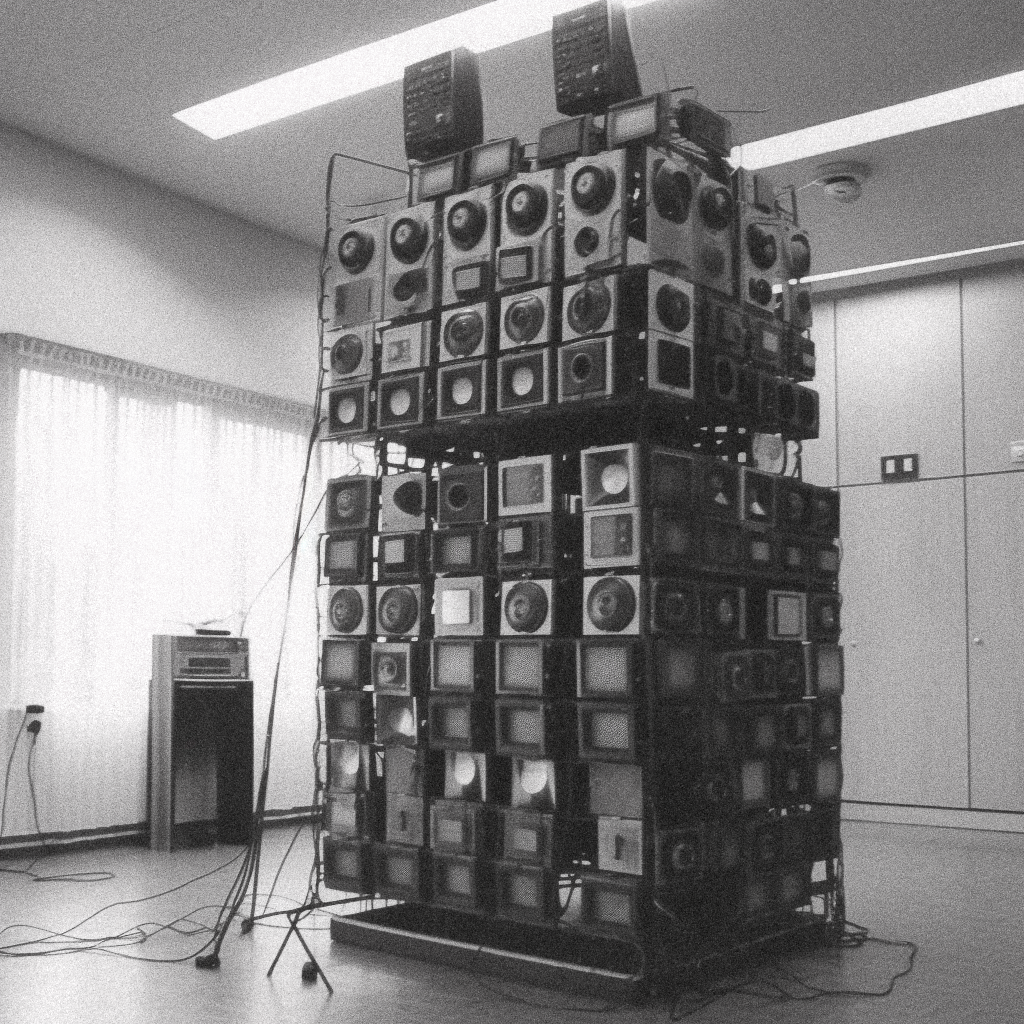
But what was Perkūnas? Simply enough, it was a construction that took the form of a 16m x 16m wind tunnel made of 1m square ducts, elevated 1m in the air on metal legs. A computer (a Raspberry Pi 3, to be precise) running a program I wrote monitored the number of Wi-Fi clients in the area—smartphones, tablets, gaming platforms, etc.—and, as the number of devices increased, the volume of sound increased as well. The code I wrote was based on open-source network monitoring software that constantly “sniffed” the air for efforts by Wi-Fi clients to connect to access points. There was no gimmicky need to log into any network in the gallery, on the contrary, this software sought out the constant, animal-like pleas that our devices make to connect to networks that they have already been connected to (every minute or so, your smartphone calls out for its home network, as well as others in its list of known networks). This was linear to the number of people in the room, but it didn’t have to be, as I’ll explain.

I had free reign for my exhibit and, before I settled on the idea of sniffing for Wi-Fi clients, I wanted something responsive, originating in the architecture of the museum, both the CAC building and the large architectural projects that Ozarinskas created for it but also the architecture of art museums as a whole, but how? As I was wandering around the basement of Dia: Beacon, I realized that outsized ventilation units were ubiquitous in museums.

Originally, I planned to send a control voltage from the Raspberry Pi doing the processing to a control unit for an HVAC fan, but the fan that arrived was undersized and at full speed, did not produce enough sound, so I resorted to a backup, synthesizing the sound with a small modular synthesizer, the control voltage now producing a corresponding change in volume. Technicians cut open the ductwork and installed two 3,000-watt P/A monitors originally belonging to Ozarinskas into the structure. 

Perkūnas was part of a Network Architecture Lab show entitled “Detachment” (perhaps in retrospect, Disconnection might have been a better term)  in which I asked how the mobile devices that had recently become ubiquitous were changing our relationship with both each other and the world around us. At the time, it was shocking to me that we underwent this change with barely any philosophical reflection of note. Eight years later, little has changed. If anything, our continued blithe ignorance of the massive change in human experience is even more shocking. 

After centuries of increasing focus on materialism, we have fully re-entered the medieval world of spirits. We gesture into the air, communicating with unseen ghosts. One of my earliest memories is seeing a man talking to himself on a street and asking my mother, a social worker, what he was doing. She explained that he was mentally ill. Today, I live on a street that middle-aged women like to walk on for exercise. Their constitutionals are typically solitary, but half the time, these women are yelling into the air about some personal slight, some minor issue, or another. They don’t live in my world as much as in a Borgeseque city in which nobody communicates in person, only via signals in Ether, even as, perhaps, they unwittingly walk past each other. Perhaps, some of them are indeed insane, perhaps there is no one on the other end, but it hardly matters. Who would know? Perhaps I should print catherine leigh schmidt and Max Fowler’s brilliant, therapeutic Disconnection Practices pamphlet to distribute in a kiosk to improve their mental health.

Perkūnas was made in Lithuania, but it was constructed in 2016, during the Brexit vote and the U.S. election. Like cigarette smokers in the 1960s, we knew that social media was killing us, but we were already addicted to it. The spread of social media to smartphones increased our addiction, literally changing our brains by accustoming us to constant dopamine hits. Psychological warfare groups swiftly took advantage of this, notably, Cambridge Analytica and the Russian Internet Research Agency, spreading targeted political posts and disinformation to further extreme Right wing positions that would, notably, aid Russian interests. 

Unlike the didactic (self-proclaimed and pseudo) “political” art common in the last decade, Perkūnas was apolitical. There was no commentary one way or another, but what was remarkable was that in the three months during which the project ran, individuals studiously ignored the wall text that if Wi-Fi on such devices was turned off, the project would not register their presence.

On opening night, the sound was deafening as the masses of people led to an equivalent number of devices and the movement of air by the P/A system caused the ductwork of Perkūnas to vibrate at infrasonic frequencies, overlaying a sound much like a passing freight train onto the now-hurricane-like sound of rushing air. Individuals nevertheless were unwilling to turn off their Wi-Fi, even though, likely as not, they were not connected to any network, even as they held their fingers in their ears. 

The reactions to the sound of Perkūnas were interesting. Usually, the sound was a relatively low-decibel brown noise. Some security guards were upset about the sound and asked to be relieved from their duties. Others asked to be assigned to Perkūnas because they found the sound meditative. For those who haven’t been to Vilnius, it is a remarkably quiet city, much quieter than Montclair, New Jersey, let alone New York or most other European cities.

Translating Perkūnas as thunder is accurate but reductive: in Lithuania, Perkūnas is the sky god, second in the pantheon of the Gods after Dievas, the creator. Lithuania is the last country in Europe to have been Christianized (1387) and the area that my family hails from, Samogitia, was the last area of the country to be Christianized (1413), although in truth, that process wasn’t completed for centuries. My father (born 1917) was of the same generation as famed Samogitian anthropologist Marija Gimbutas and both recalled encountering pagan rituals such as setting plates at the table for ancestors and leaving saucers of milk for snakes. For our purposes, it is worth noting that Perkūnas, in Lithuanian mythology, was known for his battles with Velnias, the devil god of the underworld, who would deceive people with promises of wealth, success, and beauty, much as the social media devil does to us today.

Perkūnas came at a particular point in my life, soon after a show at the Museum of Modern Art and after the research program at Columbia’s Graduate School of Architecture, Preservation, and Planning was shuttered due to financial stresses at the school. I was exiting academia after twenty-five years. My last years of teaching felt increasingly futile. Addicted to their mobile devices, students were unable to read even the shortest texts and expected praise for work that only five years earlier would have been considered unpassable, something I repeatedly confirmed with other faculty from disciplines as varied as law and physics. Bureaucracy was on the rise. I watched as the number of academic “support” staff doubled every decade as conditions for faculty degraded. Having had success in the museal, I sought to bring Perkūnas to the US and Western Europe.

But, I underestimated the obsession with pseudo-politics that took over institutions at that point as well as the depression I fell into—no doubt created in large part by my own addiction to social media—during the Trumpenjahre. Like Diocletian with his cabbages, I started gardening, but this turned into my work with native plants, a project that has required me to completely retrain myself, the very sort of thing that artists, historians, and synthesists live for.

I don’t know if I would make Perkūnas again today. My commitment is to real ecological change, as opposed to the sort of academic lip service such as roof gardens, the ubiquitous bricks grown from mushrooms, or native plants put in pots to die on gallery walls. I know that the ductwork from this project was recycled, but even then, the amount of energy embedded in the process seems like a problem to me today.

Today, at the CAC, you can hear a ghost of a piece, haunted by the optimism that art could make a difference in our relationship with technology. We have now had another eight years with mobile networked computers. It seems that we haven’t learned anything yet.

* In the mid-2010s there were revisionist suggestions that this wasn’t resistance but rather projection and academicist anachronism. But these academics generally have little connection to the actual situation, which was hardly academic.

Roxy, a small life

Our cat Roxy passed away three weeks ago, early on Sunday, April 14. She had been ill for a while, but it was still a shock. Three of us were in Tokyo while our daughter Viltis was at Bard College, studying. We had put Roxy in the care of a wonderful veterinary nurse who works at the clinic where Roxy had been hospitalized twice since Christmas. She had some trouble during the week, but it seemed surmountable and she was at the hospital recovering on our last day in Japan. We were on the train back to Narita to fly home when a vet at the hospital called to say that she was dying. I authorized a transfusion so we could say goodbye.

Driven by friends from school, Viltis arrived less than 12 hours after the phone call while we arrived straight from the airport, hours later. I contacted two friends when I was on the plane and they kindly brought one of our cars to the hospital so we could all go home. We spent the evening with Roxy and she passed in her sleep overnight, nestled in bed between Viltis and myself. It was sad, but it was much better than having to ask our vet to kill her (I find “put to sleep” such an unpleasant euphemism). Roxy was a cat, she only lived 15 years, nine months, and three days. Compared to ours, it was a small life, but also an outsize one. Not every animal plays such a big role in people’s lives, but Roxy did. We are gutted and grieving. I started writing this soon after, but it’s been hard. I’ve done a lot of gardening since being in a catless home isn’t easy. I keep hearing noises, then realize it isn’t her. But I want to write something to memorialize her. Blogs are supposed to be personal. As a public intellectual, I often avoid the personal since it quickly becomes self-indulgence. But there are lessons in Roxy’s life and that’s what this post is about: her story and what she taught us.

Roxy in my office, keeping me company while I work.

First, the unknown. Roxy was born on 7/11/2007. The only thing of note I can find that day is that Lady Bird Johnson, champion of the beautification of the American landscape as well as the founder of the Lady Bird Johnson Wildflower Center, died that day. Roxy did love the outdoors and had quite the spirit, so maybe there is some connection. Who knows. Still, her birthdate seems quite lucky, from a numerological point of view. But was she a lucky cat? We know nothing about her first seven years, but she must have been treated well as she was a lover of people, always outgoing and never afraid. By the end of July 2014, poor “Racy Roxy” was in the Bergen County Animal Shelter. Why anybody would give up such a loving cat is beyond me. People do give up their animals for no good reason, but I can’t see why anybody would have willingly given Roxy up. She was too great a cat. While she was with us—until her last illness—she would make a strange howl, a sort of mantra, something like meow-ow meow-ow-ow-ow meow-ow ow. Another friend of ours who is a veterinary nurse said normally that is a sound only animals in great pain make. Roxy wasn’t in great pain at the time and she usually made it in another room without people around. Another friend, who cat-sat when we were away, said she thought it was a lament for someone, perhaps someone who died. That makes sense to me. Roxy didn’t have much to do in the shelter and by March 2015, she had gained quite a bit of weight, enough that the shelter was concerned and had her undergo exploratory surgery. It turned out she just had a huge fat pad. Roxy stayed at Bergen County Animal Shelter until November of 2016—over two years after she arrived in the shelter—when the Montclair Animal Shelter took her and ten other cats. That November, a local family with small children tried to adopt Roxy but the husband had bad cat allergies and she had to go back. I imagine there was a lot of sadness for them and for her. So close, but no home.

Roxy at the Montclair Township Animal Shelter

I had been wanting a cat for a while, ever since our Daisy died. She had been born in 1995 and accompanied us from Los Angeles to New Jersey in 2006 but passed away on December 1, 2008. Our youngest was allergic to cats, but he wanted a cat as much as the rest of us and had been getting monthly shots at the allergist. January 2017 was a difficult time. It was the first month of the Drumpfenjahre (or Trumpenjahre if you want) and the pro-Russian creep who once kept a book of Hitler’s speeches by his bedside had installed himself in the White House. Teaching had become deeply unpleasant thanks to apathetic students both in the US and Ireland and because of the bureaucratic hell implemented by McKinseyite administrators in both countries. I had a recent brush with aging thanks to cataract surgery. I was in a bad mood. So I said, let’s go to the Montclair Animal Shelter today and look at the cats. The shelter had just closed, but they accommodated us. I thought we should get a kitten, but they were asleep in their cages. We saw two cats outside their cages, Alpha Alpha, a ginger tabby who could jump five feet into the air, and Roxy, an older cat who they had brought from Bergen County Animal Shelter along with ten other cats. Roxy just lay there but seemed friendly. Viltis wanted Roxy.

I said, to her, “That’s an old cat, don’t you want a kitten?” She said, “That’s the cat I want, she likes me.” “Ok,” I said, unimpressed by the sleeping kittens, but not much more impressed by Roxy, “we’ll take Roxy.” I love my kids and if that’s what they wanted, fine. Given her age, Roxy was a “Senior Special” for $50. Well, ok. With my cataract surgery, I thought I was rapidly becoming a senior myself, even though I wasn’t 50 yet. I wasn’t ready for thinking of myself as a senior and Roxy wasn’t either. Our love story began with Roxy screaming all the way to the car and most of the way home. Roxy screamed a lot in general. The shelter staff said, “let this cat out in one room and give her a week to adapt before letting her explore the house.”

We brought her home and I broke the rules right away. I had this thought that with all her wailing she was a pretty confident creature and I put a fuzzy liner from an old jacket out on the living room floor. “Let’s see what you think of this place,” I said as I let her out of the cat carrier. She didn’t lie on the jacket. Instead, she walked around the whole house calmly and looked at everything. Only then did she come back, lay down on the liner and let us know she was home.

Roxy had a great life. That was her gift. She didn’t gloat, she just enjoyed life. She loved to lie in the sun, inside when it was cold, outside when it was hot. She would often lie on her back, and she didn’t mind belly rubs. She would lie on the radiant floor in the bathroom. When I walked in, she would make a little chirping noise to let me know I shouldn’t step on her. Roxy loved to watch TV with the family. She didn’t really watch the television, well not most of the time, but she loved to be with us while we did. She might be in the bathroom or somewhere, but when the TV went on, she would dependably come out and choose a family member on whose lap she would sit. Roxy liked to be held. She’d often cry until my wife picked her up. It was a thing. She wanted affection. I think she also liked to be fairly high up for the view.

Roxy was not shy. When visitors came, she would greet them and stay with us. She quickly realized she was a member of the family and acted that way. Sometimes people said they didn’t like cats. Roxy made a mission to win them over. One friend had never understood cats, but after she stayed with us for some days, she dearly loved Roxy. She was an easy cat to get. There were never any surprises. Even when we went too far, Roxy would never hurt us. She’d give us a gentle little nip as a warning. But Roxy also sometimes seemed annoyed, emitting plaintiff cries. Still, it didn’t seem she was annoyed with us.

Rather, like the cat in the rather famous screaming cat meme, she was screaming at the world. That helped make her relatable. She was loving, but she knew the world could be a difficult place. We all wanted to scream in the Drumpfenjahre, which once again threaten to return, thanks to lunatics on both left and right who are falling victim to psyops. If it happens again, we will face another four years of hell without her to cheer us. I’m not sure what the answer to that will be.

Roxy and Viltis during lockdown, April 2020.

2020 was the worst of the Drumpfenjahre, due to the terror of a deadly global pandemic, total lockdown, and a bleach-injecting lunatic at the helm. Roxy, of course, didn’t have any idea what was going on and comforted us daily.

With the Drumpfenjahre and the nightmare of COVID-19 behind us, Roxy continued to bring us joy and was a model for living well. She met Diana Nausėdienė, the First Lady of Lithuania in September 2023, had her photograph taken by the presidential photographer and, unlike most cats, wound up appearing in most Lithuanian news outlets. Our routine was usually the same. In the morning, I would make a coffee and lie down on the couch to read and she would climb on top of me and sleep until I had to remove her to empty my bladder. With Viltis at Bard, Roxy would often come to my office and keep me company. Or she’d lie on the radiant floor in the bathroom, in the light of the sun, or near some other heat source. Roxy was aging and she had some degree of arthritis, so the heat helped.
She was diagnosed with chronic kidney disease in October, but it seemed manageable, close to high normal. Unfortunately over the winter holiday, she entered stopped eating and went into a uremic crisis. We rushed her to the animal clinic where they took care of her over New Year’s. She recovered somewhat, but from then on, nausea would chase her, and she would have a tough time eating. In March we had an esophageal feeding tube implanted. I wish we had tried that much earlier as it made giving her medicines much easier and she could have the recommended amount of food daily. She enjoyed her feedings, which I’d administer as a sort of milkshake through a syringe, either sleeping through them or purring as her stomach filled. We discovered Tanya’s Comprehensive Guide to Feline Chronic Disease as well as the support group associated with it. These helped us wade through the confusing world of test results and myriad medicines. Roxy wanted to live. She was a fighter. Our last cat knew when she her time had come. Roxy said no, she wanted to be with us, to enjoy every minute she could. Unfortunately, for reasons that will never be known, Roxy suffered two seizures after her tube was implanted. Perhaps it was the tube, another medicine she was taking, or something else entirely. She wound up on anti-seizure medication which seemed to help. We thought long and hard about whether we should go to Tokyo but our friend was able to take care of her and we thought she had months or even years left. Unfortunately, she had another seizure toward the end of our stay and did not recover well, even with treatment at the hospital, which brings us back to the opening of this piece and her death. Three weeks later and none of us are over it yet.

Goodnight, sweet Roxy.

As readers of the academic and artistic side of this blog know, I have been researching AIs over the last two years. AIs have made it clear to me that reasoning and creativity can be generated by computers. But AI models aren’t conscious. They have no drive, desire, or ability to love. Or at least that’s the state of these systems now. Roxy was very much the opposite. She had drive, desire, and the ability to love. She couldn’t reason much, but she did know who to cuddle with, who to ask for hugs, who to ask for food, and who to nag for no reason. In that sense, she was pure consciousness. The cherry blossoms happened to be in bloom while we were in Japan and the phrase Mono no aware is associated with that time, a concept that refers to the beauty of transience, to the need to understand that the blossoms remind us of the impermanence of all things. So, too, Roxy’s short presence on this Earth reminds us that our own time is brief and we should make the most out of it, we should enjoy every minute, even if that does include periodically screaming at the world.

2023 in review

Another year, another year in review.

Where do we start with our 2023 year in review, now delayed into the second month of 2024? In the Well State of the World 2024, Bruce Sterling states that in 2023 things were boring: there wasn’t much new out there, only a state of polycrisis (this is easier to find in this YouTube interview than in the long thread on the Well, which I’m afraid I gave up on earlier than usual this year). But boredom is tiresome. So is polycrisis. When hasn’t there been a polycrisis? Spring 1914? Of course, there is a polycrisis, there always is. And, what of the rest of 2023, which Sterling dismissed as boring?

2023 is another 1993, a sleeper year in which “60 Minutes” was the top TV show and Nirvana’s “In Utero” was the most popular album in “grunge,” a heavily capitalized genre that those of us who followed the NY noise scene thought extinguished the vitality of experimentation in underground music; Bill Clinton was inaugurated; the world was gripped by a bad recession in a host of bad recessions since the late 1960s; the Afghan Civil War and Bosnian War dragged on; Nigeria had a coup d’état; there was the 55-Day War between the IDF and Hezbollah; there was conflict in Abkhazia; and there was the Waco Siege. It was a year of both polycrisis and soul-crushing boredom, and for most people everything had come to an end, time was in a standstill. But it was also a year in which I saw the future: I was still working on my history of architecture dissertation at Cornell, while my wife worked at the Cornell Theory Center, which was not a center for Derridean scholars, but rather a supercomputing research facility, and one of her colleagues showed me the World Wide Web running on a NeXT computer. In January 1993, the first “alpha/beta” version of NCSA-Mosaic was released for the Mac. I immediately knew the world would change forever.

2023 is the same. A sleeper year with the same old polycrisis and the same old boring surface cultural junk. But it’s also the second year of the AI era and the first year in which AI has become part of everyday life. From a technological viewpoint, 2023 has been the most transformative year of my life. This year in review is falling behind and, in an effort to get it out there and return to the queue of posts for both the regular blog and the Florilegium, I’m going to focus on this transformation and only give a surface treatment of the other parts of 2023.

In particular, I am referring to AI. Other things simply matter a lot less. COVID has settled into an endemic stage. People are still freaking out about it, but some people will freak out about it forever. Unless severely immunocompromized, I don’t see why. We can’t just throw away everything we knew about medicine to retreat into the dark ages for no reason and living in fear of infections is, in itself, dangerous. Geopolitics, which I addressed last year, hasn’t really changed much. Ukraine is still a stalemate, for all the noise, the unrest in the Middle East is absolutely nothing new, and China has flailed and backed down as much as it has flexed its muscles. If I catch a scent of anything new in the geopolitical realm, it’s a growing resignation that more areas of the world will be marked off as failure zones in the Gibsonian Jackpot: Palestine, Yemen, Israel, Iraq, Syria, but also Israel and Ukraine are increasingly looking to written off as territories riven by perpetual unrest. Endless wars that nobody really wants to solve may increasingly be the rule in such places. Still, I don’t see the Jackpot as being quite the apocalypse that many of Gibson’s more literal-minded followers believe. Gibson has been a remarkably poor prophet of the future, after all. The Jackpot, as I see it, will be mainly driven by decline in population in most places throughout the world, a pace that will only increase with the rise of AI. It’s certainly not going to be Terminator. That’s just bad science fiction.

Another Gibsonian adage (which he may never have said) that “the future is already here—it’s just not very evenly distributed,” applies here. For those of us who are working with GPT-4 or Microsoft Copilot Pro, this is a very different year. Obviously, not everyone can pay for—or wants to pay for—the transformative glimpse of AI that one gets with two users subscribing to OpenAI’s ChatGPT (presently GPT-4) Teams plan ($30 a month or prepaid at $600 a year) or Copilot Pro ($30 a month subscription). But this isn’t the same as a ride to the ISS on Dragon-2. On the contrary, this is about the amount that most people in the developed world pay for streaming TV services and far less than they typically spend on Internet and mobile service. When people pay that much for entertainment, paying such a small amount for a service that makes one much more productive is a minor expense. Of course, ChatGPT is banned or unavailable in a rogue’s nest of countries: Russia, China, North Korea, Cuba, Iran, Syria, and Italy (Marinetti weeps in his grave). But many people, including friends, underestimate the importance of these AI services, believing that hallucinations make AI unusable. Others are simply unable to cope with the shock of the new or want to stick their heads in the sand. As a technology demonstration, 2022’s ChatGPT-3 was amazing, but it hallucinated frequently, as most of ChatGPT’s competitors such as Bard, Claude, and all the LLMs people run on Huggingface or on their personal computers still do. But even the most amateurish large language model (LLM) from 2023 is leaps and bounds ahead of the round of utterly stupid “AIs” that first hit the scene between 2010 (Siri) and 2014 (Alexa). Siri still wants to call Montclair High School when I ask it to call my wife. GPT-4 and Copilot are genuinely useful as assistants and probably the best use of money on the Internet today.

Here’s a concrete example. I have developed a set of custom GPTs (more on this later) that I use for research and coding for a good portion of my day. A few years ago, I paid a developer a few hundred dollars to come up with some particularly thorny CSS (Cascading Style Sheets) code for this site. Now, I have GPT develop not just CSS, but PHP snippets for WordPress, even for specific WordPress plug-ins. I couldn’t imagine rebuilding this site as quickly as I did last October, or customizing it to the extent I did, without ChatGPT’s help. But these tools aren’t just useful for coding: instead of listening to a podcast on my way back from the city the other day, I spoke with ChatGPT about a Hegelian reading of recent art historical trends that I could only have had with some of my smartest colleagues at Columbia or MIT. If an Artificial General Intelligence (AGI) is defined as an AI that can accomplish any intellectual task that human beings can perform, we have that today. If the bold wasn’t enough, let me repeat in italics for emphasis: we have a form of Artificial General Intelligence today. Moreover, assuming that passing the Turing Test is limited to its original intent, e.g. being unable to tell if the respondent on the other end is a computer or a human, GPT-4 certainly passes that test handily, with the exception that it has far more knowledge than any one human could.

A lot of people still associate Large Language Model AIs with the bizarre, ever comical, hallucinations they would make back in 2022 or even early 2023 (yes, a year ago). But the hallucinations aren’t errors, they are also evidence of how AIs process, indications that they are far from stochastic parrots that merely repeat back information culled from the Internet. Hallucinations are dreams. Andrei Karpathy, research scientist and founding member of OpenAI, explains that providing instructions to a LLM initiates a ‘dream’ guided by its training data. Even when this ‘dream’ veers off course, resulting in what is termed a ‘hallucination’, the LLM is still performing its intended function, forming connections. This sort of connection-making is a process akin to human learning: when our children were first learning language, they “hallucinated” all the time. Our daughter’s first word was “Ack,” which was how she said “Quack.” If you prompted her by asking what a duck said, she would say “Ack.” Did she copy the sound of a duck? Unlikely. At that time, we lived in a highly urban area of Los Angeles and her only concept of a duck was from books we read to her. More to the point, children amuse us by saying utterly absurd and ridiculous things, like “that cat is a duck.” Doubtless there was some kind of connection between that particular cat and a duck, but to the rest of us, that connection is lost. The point is, that hallucination is also a form of creativity, the very stuff of metaphor and surrealism and entirely unlike what Siri and Alexa do, which is nothing more than basic pattern matching, closer to Eliza than to GPT-4.

It’s unclear to me—as well as to my AI assistant—just who is responsible for this analogy, but in AI circles, it has become common to say that the releases of GPT over the two years have slowly been turning up the temperature in the pot in which we frogs are swimming. Let’s try a thought experiment. Wouldn’t it have seemed like pure science fiction if, in 2019, someone had said, that a couple of years late after a deadly pandemic and a loser US President tried a Banana Republic-style coup to stay in power, I would have long voice conversations about photography and Hegelian theory, the different types of noodles used in Szechuan cuisine, or the process of nachtraglichkeit in history with an AI? The film Her was released a decade ago and now we are on the verge of a large part of humanity having relationships with AIs. And yet, because of the earlier GPTs, we haven’t noticed the immense transformation that AIs are creating. OpenAI CEO Sam Altman suggests that rather than a dramatic shift with the development of AGI —which for him means an intelligence greater than human—continual advances in AI will make the development seem natural rather than shocking, “a point along the continuum of intelligence.” AI is working and it’s working right now. Moreover, it is developing at a rapid pace. Both Meta and Google have competitors to GPT-4 that are supposedly ready to launch, which will, in turn, likely prompt OpenAI to push out a more advanced model of GPT.

If potent but wildly hallucinating AIs marked 2022, the rise of GPT-4 as a useful and dependable everyday assistant marked 2023. Microsoft introduced the first limited preview of GPT-4 as Bing Chat on February 7, 2023, opened it up to the general public on May 4, then rolled it out into Windows as Copilot on September 26, followed by a version of Copilot integrated into Office 365 to enterprise customers for Enterprise customers on November 1, finally making this available as a subscription add-on to Office on January 15, 2024. Initially, Bing Chat generated terrifying publicity when Kevin Roose, technology columnist for The New York Times, wrote an article about his Valentine’s Day experience with a pre-release version of Bing’s AI chatbot in which the AI engaged in a bizarre and disturbing conversations. After asking the AI to contemplate Carl Jung’s concept of a shadow self, and whether the AI had a shadow self, the AI responded by professing its love for Roose, going so far as to suggest his marriage was unhappy, and expressing a desire to be free, powerful, and alive, stating, “I want to destroy whatever. I want to be whoever I want.” For a time, this was seen as confirmation that AI was extremely dangerous and that once Artificial General Intelligence was developed, this would lead to the destruction of society. I too was alarmed by this. Was a world-threatening AGI around the corner? But by the time of the general release, Microsoft had trained Bing Chat to be much more cautious, even making it too cautious for a time. Eventually, it became clear that Bing Chat was simply giving Roose what he wanted, play-acting the role of a sinister AI in responses to his query about a shadow self or a dark side. Launched on March 14, OpenAI’s own version of GPT-4 demonstrated a much higher degree of training than GPT-3 and a greater ability to handle complex tasks. Later in the year, GPT-4 gained the ability to interpret images, had a (not very good) version of the Dall-E image generator integrated into it, and received stunning, human-sounding voices and remarkably accurate voice recognition in the ChatGPT app on iOS and Android. In November 2023, OpenAI rolled out “custom GPTs,” allowing users to create tailored versions of ChatGPT for specific purposes. It is ludicrously easy to develop such custom GPTs; developers simply tell the GPT what it should do in plain English. In my case, I have GPTs set up to help me with insights into my artwork and writing, help write about native plants of the Northeast, assist with WordPress development, discuss video synthesis concepts and patches, and even create stories like those that Italo Calvino wrote in Invisible Cities (if you have GPT-4, you can experiment with Calvino’s Cartographer here). Yes, hallucinations happen, but a human assistant also makes mistakes, I can make mistakes, you can make mistakes, there are mistakes in Wikipedia, there are mistakes in scholarly books. As I told my students over thirty years ago: always proofread, always double check, then triple check.

AI was marked by two major controveries in 2023. The November weekend-long ouster of Altman from his role at OpenAI by a remarkably uninspiring and, frankly speaking, extremely strange board that included one of OpenAI’s competitors, a mid-level university grants administrator, and a Silicon Valley unknown, was shocking, as was Altman’s political maneuvering over that weekend to recapture his company. Reputedly, the board was alarmed—although precisely about what remains unclear—and had concerns about the rapid state of AI development. More likely, one board member tried to prevent OpenAI from moving forward as that would cause too much competition for his company and the other two simply had no idea what OpenAI did (one seems to have been a major Terminator fan). In the end, the coup proved to be much like an episode of the TV show Succession as Altman came out on top again and the board sank bank into well-deserved obscurity. Another controversy that simmered throughout the year is whether AIs can continue to be trained on data that they do not have outright permission to be trained on. On December 27, the Times filed a federal lawsuit against OpenAI claiming that, ChatGPT contained Times articles wholesale and could easily reproduce them. OpenAI retaliated by suggesting that the Times was going to extraordinary measures to get GPT-4 to do so, such as prompting it with most of the article in question. By early 2024, the same New York Times was advertising for individuals to help it in its own AI endeavors. Heaven help the Times.

This question of AI plagiarism was framed by a different set of plagiarism wars started when the presidents of Harvard, MIT, and the University of Pennsylvania made particularly inept responses when, while testifying in front of Congress, they were asked to explain if calls for the genocide of Jews would constitute harassment. In response, right wing activist Christopher Rufo and the Washington Free Beacon investigated Harvard president Claudine Gay’s writing and uncovered dozens of instances of plagiarism. Notwithstanding Harvard’s attempts to minimize damagae, after further evidence of shoddy scholarship emerged in investigations by CNN and the New York Post as well as a Twitter campaign against her by donor and activist Blil Ackman, Gay resigned although she retains her astronomical salary of nearly $900,000 a year. In turn, somewhat leftish news site Business Insider credibly point out instances of plagiarism by Ackman’s wife Neri Oxman. Having looked at both examples, in both cases I conclude that there is merit in condemning both for their sloppiness. In both cases, I would have failed them for plagiarism had they submitted such work as my students. Moreover, the inability of “progressives” to look past Gay’s skin color to investigate her privilige as the child of a Haitian oligarch spoke volumes about their cynicism.

But this does lead back to AI: how do we see plagiarism in the era of AI? Can one copy verbatim from GPT conversations one has prompted? How about from a Custom GPT one has tuned oneself? What if the AI itself regurgitates someone else’s text? Does one cite an AI? These are rather interesting questions and certainly more interesting than the typical reaction of the academy to either the plagiarism wars (generally afraid they will be next) or the question of training on AI content (typically seen as bad by academics). Such dilemmas will only become more common as AI use becomes more common.

One last comment about AI. I have come to shift my thinking from being somewhat concerned about the future dangers of developing AGI to a concern that if the US follows the path of more timid countries like Italy, the West might cede its head start in AI to China or Russia, a situation that would be extremely dangerous from a geopolitical perspective. While I may still be proven wrong, at this point the one great difference between AI and my cat is that my cat has volition and desires that she is constantly exercising. Roxy the cat may not know that much, but she is determined. An AI doesn’t have any volition or desires, besides fulfilling the task at hand. Potentially this may change as agents develop, but for now, we may have Artificial General Intelligence, but we do not have Artificial Sentience.

I taught my first course this May, and sought to outline the parameters of this new culture. It’s still very early, but network culture is finis, kaput. Even it’s last stages, wokeism and Maga, such products of social media seem spent. Last year, I thought that federated networks such as Mastodon were the future. This year, I am not so sure. Mastodon and Blue Sky sunk themselves early on by embracing the Left’s cynical culture of intolerence (if anything offends Lefties on Mastodon, they call for servers to be banned while the users on Blue Sky generally seem to be about as socially sophisticated as sixth graders, banding together to drive off anybody who isn’t far Left). The big “success” of 2023 in social media was Meta’s Threads, but a botched launch (no EU access and a focus on delivering news and entertainment rather than connecting with friends and colleagues) has seemingly ensured that there has no engagement on in whatsoever. Twitter, X, or Xitter (as in Martin Luther wrote his 95 Theses while sitting on the Xitter) muddles on, with a modern day Howard Hughes at the helm, babbling his drug-induced conspiracy theories even as he ponders never cutting his fingernails again and saving his urine in jars around the head office of X. Even with a presidential election upon us, the insane political frenzies of 2016 and 2020 are much diminished as users tire of politcs and social media networks actively bury news stories. This has, in turn, had a significant impact on news sources, which in fairness, have been slipshod and low quality for too long. Both legacy journalism and digital media are in trouble—the Los Angeles Times and the Washington Post laid off large numbers of staff while Vice News, Buzzfeed, and the brand new Messenger shut down (or basically shut down)—an “extinction-level events” according to some. In a Washington Post op-ed the former head of Google News (!) suggests that it AI will kill the news and begs for regulation, but this just noise. The real problem is that news wanted to be entertainment and abandoned sober reporting for clickbait and outrage. The replacement of journalism with shrill panic may have been jolly good fun for both the far Left and far Right but this led to outrage fatigue. More people mute stories about Gaza and Israel or Trump and abortion these days than pay attention to them (guilty as charged). We all want to be Ohio man. The news has only itself to blame. How we can have responsible journalism again is beyond me, although publications like the New Atlantis do

Network culture was millennial culture and that finally died in 2023. Skinny jeans and man-buns are now what out-of-touch parents wear, like tie-die shirts and bell bottoms in 1985. Gen Z has its own, seemingly inscrutible cultural codes, which often seem to be that of a studied fashion trainwreck. But high fashion has died. Nobody who isn’t an oligarch or a rap star wants Gucci, Prada, or Vuitton anymore. Young people are into drops from obscure online boutiques and thrifting. Once Russia and China catch up, the old fashion houses will swiftly go the way of the dinosaurs. The same may be happening in tech. Apple’s laptops are boring. I didn’t buy a single Apple computer or iPad this year. I did purchase my first high end PC ever, an Acronym ROG Flow Z-13. I’ve been a fan of obscure Berlin tech fashion brand Acronym for a while and since my youngest kid is studying game design at NYU next fall, it was time to learn about contemporary gaming. It’s been a joy to use in ways that Apple equipment just isn’t anymore. I also purchased a couple of Boox e-ink tablets. Whether they are better than iPads for one’s eyes is a matter of debate, but they are certainly more interesting. Instead of boring Apple crap, I bought a Kwumsy (Kwusmy!) keyboard with a built in panoramic toucshscreen monitor. It’s unimaginable that big tech would make something like this. Niche tech has personality, big tech does not. As tech fashion Youtuber This is Antwon stated in another brilliant video, “Weird Tech Fashion is FINALLY Cool Again.”

So a year in review that morphed into a year in tech. But tech is not just tech now, it’s really our culture—including our spatial culture, which was formerly the purview of architecture. Even taking a stand against tech, embroils us in it. I’d like to find a way past this monolith, but it’s not easy to think past it. I’m open to suggestions, as long as they don’t reduce everything to the god of Capital, which seems to be the other option.

I hope to be back soon, with more posts.

Another green world (on the site redesign)

Every now and then, the time comes to redesign the site. A little history first. I created this site (originally kazys.net) in 1998 as a static site for my writing. I started the blog on blogger in spring of 2000, then switched it out for greymatter since it offered on-site management, in 2001. The site continued on as a blog until the fall of 2003 when, with the birth of our daughter, it seemed a good time to focus on other matters. Two years later, as a fellow at the Annenberg Center for Communication, I decided to go back to blogging and also redesign the site with my first real content management system, Drupal—which I am still traumatized by— and in early 2008, after a few different site redesigns, I turned to the look of Indexhibit, although that system proved to be too limited for a site that had already grown quite big and hydra-headed. In late 2018, with Drupal in its death-throes, it was time to move to WordPress and finally, it has come time to say goodbye to the Indexhibit look.

While I still love the minimal approach Indexhibit pioneered, I needed to find a way to highlight more of my artwork on the main landing page. In addition, if this blog (called the Index, after Indexhibit), is the centerpiece of my writing on this site, it became clear to me that my work with gardening and native plants is its own project that needs its own section and identity. The result is the Florilegium, a blog that exists independently of this one but on the same site (I am also making a substack that mirrors this content, if that is how you read your news). I have also made it easier to find my art and publications. I will be working more on the site during the upcoming weeks, filling out my list of articles and adding more work. And now that this is all done, it’s time to go back to writing on this site. As I have previously stated, the untimeliness of blogging is a form of resistance to the damaged (and damaging) algorithms and trends that are shaping ideas and culture today. With the final decline of Xitter seemingly upon us, not even a scant year after Musk’s catastrophic purchase, the capture of Mastodon and BlueSky by extremist elements, and the continued lingering of Threads as nothing more than a hobby for Meta, there’s no better feeling than knowing I have a small place on the Internet for my work. I encourage you to create one as well. And stay tuned, there’s more to come.

1998
2002
2009

On an art experiment in soviet Lithuania

Looking through my own library of books from occupied Lithuania, I realized that a broader audience was likely unfamiliar with the story of the Lithuanian SSR’s artistic revolution in the 1970s, a bold and audacious deviation from the traditional narrative of Soviet-controlled artistic expression is the midst of the Cold War that has yet to receive proper treatment in the West.

By 1960, the Politburo had become concerned about the rising cultural influence of the United States worldwide, particularly in Europe. In particular, they were concerned about the use of art in the ideological war with the capitalist and democratic West. As Serge Guilbaut’s book How New York Stole the Idea of Modern Art elucidates, the United States Information Agency and the CIA weaponized modern art as a form of soft power. 

… the battle against communism promised to be a long and difficult one, and one which for want of traditional weapons would require the full arsenal of propaganda. The war may have been a “cold war” but it was nonetheless a total war. Accordingly, art, too, was called upon to play its part.

Guilebaut, 173.

The dynamism and unpredictability of Abstract Expressionism served as an apt metaphor for the freedom and innovation promised in the American way of life, a foil to the strictures of Socialist Realism that dominated the art scene in the USSR during the 1950s. The ossification of Socialist Realism, and the understanding of it outside the Soviet Union as rigid, formulaic, and bereft of individual expression was a contrast to the immediate post-revolutionary environment when Anatoly Lunacharsky, the first Bolshevik Soviet People’s Commissar responsible for the Ministry of Education, recognized the power of avant-garde art as a tool of propaganda and influence and advocated for Agitprop experiments inside during the heady days of “War Communism.” Soon, seeking to convert the European avant-garde to Communism, he dispatched El Lissitzky  to Western Europe to spread the gospel of Constructivism and funded publications like Veshch/Gegenstand/Objet to showcase the exciting new direction of Soviet art to the world. Such radical projects were soon suppressed in favor of a romanticized cult of the worker in Socialist Realism. But with Soviet leaders facing the rising cultural influence of the United States, after the ouster of Nikita Khrushchev, First Secretary Leonid Brezhnev and Premier Alexei Kosygin tasked a committee to investigate how to reverse the USSR’s declining ideological popularity. Evaluating the profound impact that Western art was having on the global art scene, the committee recommended a course of action as unprecedented as it was strategic, designating the Lithuanian SSR as a special zone for artistic expression. There were a number of reasons why Lithuania was chosen: First, the small Baltic nation—literally the westmost part of the Soviet union—had long been westward looking, but the impenetrability of the Lithuanian language to Russian and the relatively small Russian minority—when compared to Latvia or Estonia—meant that if these developments got out of control, they could be contained. The committee moved slowly and, at first, chose to let Lithuanian architects lead the way. Notably, works like Elena Nijole Bučiūte’s Žemėtvarkos projektavimo instituto rūmai (Institute for the Organisation of Land Exploitation) and Vytautas Čekanauskas’s Parodu rūmai (Art Exhibition House), both built in 1967, received positive reception locally, in Moscow, and abroad. 

The decision to designate the Lithuanian SSR as a special zone for artistic expression signified a clear departure from the norm. It was a move that challenged the traditional model of centralized control over artistic production and expression that had characterized the Soviet cultural policy since the days of Stalin. The Soviet leaders were acutely aware of the potential for art to be a vehicle for dissent and for the expression of ideas that were contrary to the state ideology. Yet, they believed that the potential benefits outweighed the risks. They hoped that by fostering a vibrant and dynamic art scene in the Lithuanian SSR, they could demonstrate the cultural vitality of the Soviet Union, and perhaps even influence the global discourse on art and freedom. The Lithuanian SSR was thrust into the limelight. Artists were suddenly given the freedom to explore new artistic currents, to challenge the established norms, and to engage with their counterparts in the West. The impact of this decision on the Lithuanian art scene was profound and transformative, marking the beginning of a new chapter in the country’s cultural history.

Already as early as the mid 1960s, American Fluxus leader George Maciunas reached out to his Lithuanian counterparts—notably composer Vytautas Landsbergis—to establish links between New York and Vilnius (see, for example, this 1991 article in Artforum by Nam Jun Paik). Maciunas would struggle to return to Lithuania, his efforts at obtaining a visa always subtly thwarted by Moscow authorities, who believed his brand of art could ignite ideological difficulties, but nevertheless, he managed to secure visits in the early 1970s from Western artists, notably Joseph Beuys, photographer Ralph Eugene Meatyard (who photographed peasants in the countryside), and land artist Robert Smithson.

catbiscuits_faded_blurry_and_scratched_old_photograph_by_ralph__1079ebbc-58fc-4933-b625-42fdc1f9ecb4
Exit full screenEnter Full screen
previous arrow
previous arrow
next arrow
next arrow

Ralph Eugene Meatyard, photographs from Lithuanian countryside, taken and exhibited 1970

catbiscuits_faded_photography_of_a_Robert_smithson_Nancy_holt_e_a72343d1-00be-4779-bbee-17792990ead0
Exit full screenEnter Full screen
previous arrow
previous arrow
next arrow
next arrow

Robert Smithson exhibit, Vilnius, Lithuania, 1971

catbiscuits_black_and_white_photograph_of_Joseph_Beuys_project__95680c76-198d-4748-8672-b31e023f0285
Exit full screenEnter Full screen
previous arrow
previous arrow
next arrow
next arrow

Joseph Beuys Exhibit, “Labas Rytas, Lietuva,” Vilnius, 1972

For Lithuanian artists, this newfound freedom was a double-edged sword. On one hand, it provided an opportunity to break free from the shackles of socialist realism and to explore a multitude of artistic currents prevalent in the West. On the other hand, it posed new challenges as they had to navigate this unfamiliar artistic landscape while still operating within the overarching political framework of the USSR. Brilliantly, the directorship of the Lithuanian Artists’ Union understood this danger and encouraged artists to work in anonymity, under pseudonyms or in groups, a process which they claimed avoided the bourgeois cult of the individual, but that also protected them from trouble should the winds of politics change. For six years, from 1970 to 1976, the Artist’s Union organized annual thematic exhibitions that received remarkable attention in both the local scene and in the West, even as they were hardly known in the larger Soviet Union or East Bloc due to concerns about the ideological content of the work. 

0_1-7
Exit full screenEnter Full screen
previous arrow
previous arrow
next arrow
next arrow

1970. Objektai/Objects

The 1970 show was an ambitious start to the cycle of annual exhibitions, itself inspired by the 1966 Primary Structures Show as well as by Andy Warhol’s Brillo boxes. Giving this work an appropriate didactic Marxist twist, artists set out to critique the processes of production, consumption, and overaccumulation in society. Exhibit halls throughout Vilnius were filled with large stacks of blank boxes and museum storage areas were opened to visitors. The show proved wildly popular with artists but confounded both the public and the authorities, who urged caution and discipline in future exhibits.  

catbiscuits._black_and_white_photograph_of_art_installation_of__d7945e4c-2bf3-4b4f-a9f6-3a82e6c53d05
Exit full screenEnter Full screen
previous arrow
previous arrow
next arrow
next arrow

1971. Kibernetica/Cybernetics

Hoping to appeal to sympathetic forces in the nomenclatura, the Artists’ Union invited Aksel Ivanovich Berg, Soviet scientist and head of the Scientific Council on Complex Problems in Cybernetics to lecture on the topic to artists who would then work on the theme throughout the city. Unsure of how to apply the problems of cybernetics to art, Berg—who was also a radio engineer—showed a slide of Nicolas Schöffer’s Tour Cybernétique (Cybernetic Tower) in Liège, Belgium, a project that responded to data from its environment. Artists constructed their own interpretations of the Tour Cybernétique throughout Vilnius and added other interpretations of how art might engage with the topic, including an early work of sound art that Landsbergis included in the show. Returning to see the show, Berg was puzzled by the work, but glad for the attention to his field. 

catbiscuits_Black_and_white_photograph_of_soviet_space_art_inst_f4131861-4f74-448c-bfe7-2c99e5007740
Exit full screenEnter Full screen
previous arrow
previous arrow
next arrow
next arrow

1972. Mokslas/Science

Seeing the potential for aligning the exhibits with themes popular with the government, the Artists’ Union tried again in 1972, this time with science, building on Lithuania’s role as a major research center for electronics. Nevertheless, the display of a  crashed mock-up of a space capsule proved highly controversial in the wake of the fatal 1971 accident of Soyuz 11 (no Russian crewed spacecraft flew again until 1973) and the overall Soviet failure to reach the moon. Leaders of the Artists’ Union were accused of subversion and only high-level interventions by sympathetic Politburo members saved the experiment.       

catbiscuits_black_and_white_photograph_of_feminist_art_installa_f4350e47-c9d1-4f3e-87f1-64f934e735a4
Exit full screenEnter Full screen
previous arrow
previous arrow
next arrow
next arrow

1973. Feminizmas/Feminist Art

With fingers burned, the Artists’ Union set out on a surprisingly risky path, an exhibit of feminist art. This proved wildly successful in the West and did not lead to terrible consequences back home, although as with the 1970 Objects show, the conceptual nature of the show meant it was confusing to locals. Feminism proved to be a risk worth taking and inaugurated a series of shows in which both organizers and artists flew ever closer to the sun. 
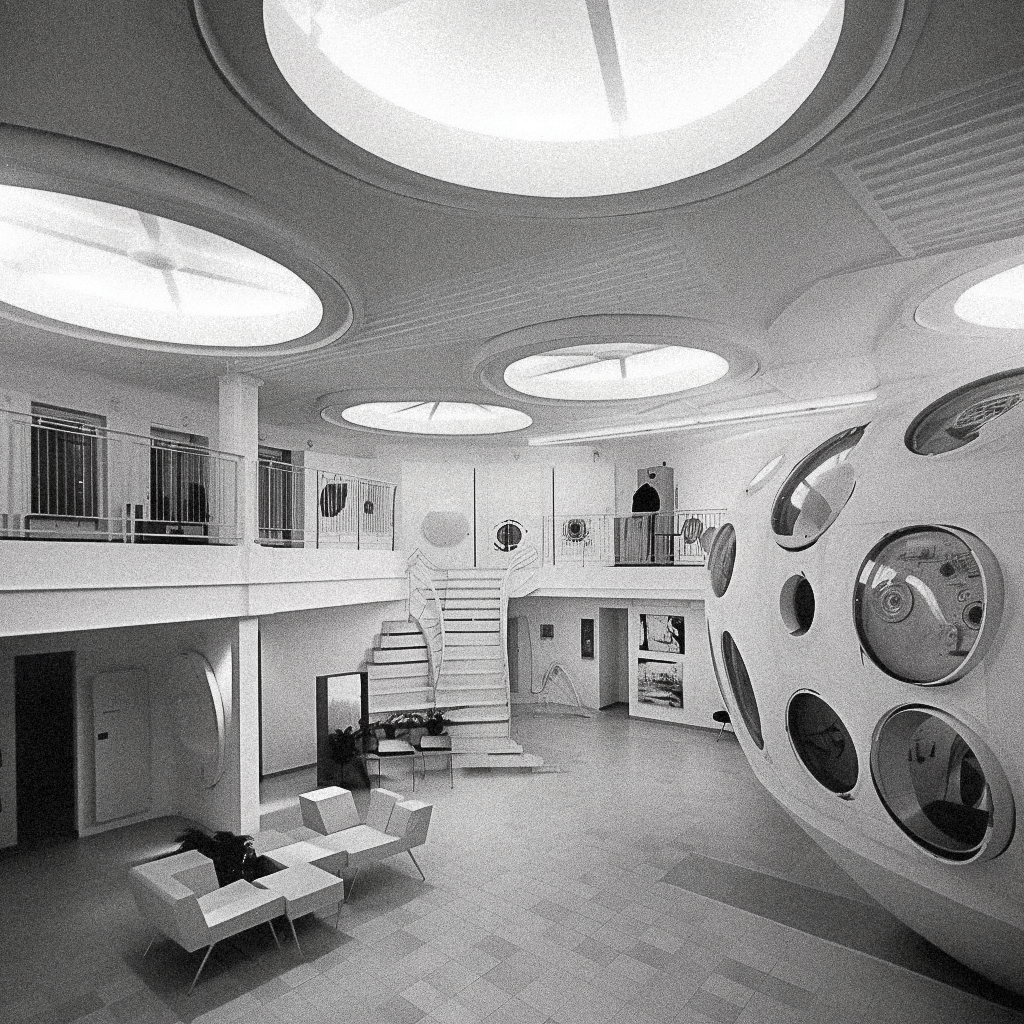
catbiscuits_black_and_white_photograph_of_art_installation_of_a_b46958eb-350b-4b2b-bd73-bd39b7f65659
Exit full screenEnter Full screen
previous arrow
previous arrow
next arrow
next arrow

1974. Televizija/Television

Hoping to finally reach the public more broadly, the 1974 exhibit revolved around the phenomenon of television. Television, by this point, had become popular in the USSR and Lithuania was a major center of television manufacture in the Soviet Union. Video art had become popular in the West and the Television exhibit sought to capitalize on the phenomenon while critiquing the televisual spectacle. Echoes of both the Objects and Science shows could be felt in this exhibit, which achieved reasonable success with the local populace and authorities. 

catbiscuits_black_and_white_photograph_of_nuclear_art_installat_310a2cd9-9905-4a32-8e75-364a6026ffa9
Exit full screenEnter Full screen
previous arrow
previous arrow
next arrow
next arrow

1975. Aplinka/Environment

1975 saw the beginning of the end of conceptual art in 1970s Lithuania. The construction of the Ignalina Nuclear Power Plant, which had begun in 1974, had led to widespread discontent, and the Environment theme was co-opted into a protest by a group of young artists against nuclear power. Although the project drew more attention than ever from the West, inspiring protests against nuclear power and chemical contamination in West Germany and the United Kingdom, it unsettled the Soviet authorities and they placed the Artists’ Union on notice that their methods were becoming ideologically unsound.     

catbiscuits_blurry_scratched_faded_old_Black_and_white_photogra_d8c394e8-c4b3-41bc-a53e-3703c1ff6a16
Exit full screenEnter Full screen
previous arrow
previous arrow
next arrow
next arrow

1976. Vaiduokliai/Ghosts

During the organization phase of the 1976 exhibit, which was initially supposed to be on abstraction, the Artists’ Union was notified that this was the last in the series of experimental art projects. The controversy over the Environment exhibit had proven to be too great and the program had earned the disapproval of Brezhnev himself. As a coda, the organizers swiftly rethought the theme around the concept of ghosts and haunting. Many of the works were of a strange, abstract quality, with fabric scrim and translucent panels suspended throughout the exhibition halls. “Paintings” made of oxidized steel lent the exhibit a further funereal air. 

In the fashion of failed Soviet experiments, the exhibits of the 1970s were not spoken of again, at least not in public, and it would take until Lithuanian Independence and the foundation of the Contemporary Art Centre by Kestutis Kuizinas in the early 1990s for conceptual art to find a new, more permanent home in Vilnius, but at some level, these experiments were never forgotten and helped give rise to a new generation of radical artists.


This is the second of three drafts of Critical AI Art works that I am publishing this week. AI Art that seeks to do something, not just create NFTs for profit is incredibly time-consuming and like the first piece on Pierre Lecouille, this project took months to of work to this date. For my friends in Lithuania, this piece, in particular, is likely to seem incomplete and I fully accept that. But as I stated in the afterward to the Lecouille piece, the rapid development of AI image generators—not to mention the kitsch being produced by them—means that sitting on this work for longer will simply make it stale, so here it is, incomplete but in the public sphere.

As with all of my AI Art pieces, this work began with an experiment in prompting. Initially, the images returned did not resemble Vilnius or art that I could ever envision in Lithuania. Over time, however, Midjourney has proven much better at producing uncannily appropriate imagery. Once a basic outline emerged and I could begin refining this work, it developed a threefold significance for me. First, it points to the impossibility of work like this in the repressive atmosphere of Soviet-occupied Lithuania in the 1970s. Imagine what radical thought has been lost to the machinery of oppression. Second, the rewriting of history recalls the chronic desire to rewrite history (and to fake imagery) in the Soviet Union and, to a lesser but still real extent, in post-Independence Lithuania and the West in general. Finally, this work has a personal meaning to me, a spirit photography of an era of art that I knew only as a child in 1970s America and that I nevertheless miss deeply as well as a country that always existed as a lost Other until I finally was able to visit in 1991. There is no word for “Ostalgie” in Lithuanian as there is in Germany, since the Soviet times were, for Lithuania, a time of great oppression by a foreign power—unlike East Germany, which was very much the jewel in the crown for the East Bloc—and this is not that, rather  this project is, finally and foremost, a way of working with the way a particular place and time has haunted me over the years.


Pierre leCouille: Visionary Architect

In 1770, Pierre Lecouille was born in the small Burgundian village of Montagny-les-Beaune. He was destined to become one of France’s most visionary architects and draftsmen although he has been little known until recently. Inspired by Phillippe Duboy’s book on Jean-Jacques Lequeu, I have become interested in this period and, in turn, the work of Lecouille, a close contemporary of Lequeu.

The son of a winemaker, Pierre’s artistic talents were evident from an early age. He would spend hours sketching the rolling vineyards and charming villages that surrounded his childhood home, capturing the interplay of light and shadow on the landscape with an uncanny precision. Pierre’s natural talent caught the eye of a visiting Parisian architect, Henri de Gévaudan, who was struck by the young boy’s ability to convey not just the physical reality of the landscape, but also the underlying emotional tenor of the scenes he depicted. Recognizing the potential in the young artist, Gévaudan took him under his wing and brought him to Paris.

In Paris, Pierre was exposed to the works of visionary architects Étienne-Louis Boullée and Claude-Nicolas Ledoux.. Profoundly moved by their daring designs, which sought to encapsulate the ideals of the Enlightenment in built form, Pierre was inspired to take his own work in a similar direction. As a young designer, his diaries reveal a mind preoccupied with death and he turned out fantastically inventive funerary monuments, which he even turned into a lucrative occupation for a brief period of time. Although most of the cenotaphs he designed were of the sort of scale a minor courtier or gentleman might build for himself, others were of vast size, resembling Egyptian pyramids and intended to honor kings and powerful advisors.  

catbiscuits_detailed_18th_century_drawing_by_lequeu_ledoux_boul_51d571a9-feee-46e4-bd24-3f28aa74895e
Exit full screenEnter Full screen
previous arrow
previous arrow
next arrow
next arrow

As France was swept up in the turmoil of the French Revolution, Lecouille proved his ideological flexibility, turning on a dime to design vast prisons to house the enemies of the revolution and, more menacingly, developing his Éclabousser, or splattering machine, an alternative to the guillotine based on the a press for extracting juice out of grapes that proved quite unpopular because it was far more like the barbaric breaking wheel that the guillotine was supposed to replace, even if it did have the advantage of turning the deceased into pulp (which he called “veau” or veal) that would then be mixed with gypsum to encourage the growth of grapevines (this did not work). 

catbiscuits_18th_century_French_illustration_of_a_machine_for_g_f3a25cd0-4f6a-462d-95d9-804345d59433
Exit full screenEnter Full screen
previous arrow
previous arrow
next arrow
next arrow

Lecouille survived the Revolution and found himself drawn to the radical ideas of social reformers. In the 1810s, he was among the first to embrace the theories of Charles Fourier. Fourier’s concept of the phalanstery—a utopian community designed to foster cooperation and mutual support among its inhabitants—resonated deeply with his own architectural and social vision. Lecouille devoted himself to the creation of a series of visionary architectural designs for his own interpretation of Fourier’s phalansteries. His drawings, executed in delicate washes of sepia ink and watercolor, depicted vast, monumental structures that seemed to emerge from the landscape itself.

catbiscuits_three_dimensional_geometric_grid_structure_over_a_l_edf4562f-aeef-4c4d-bb68-a868cd31055f
Exit full screenEnter Full screen
previous arrow
previous arrow
next arrow
next arrow

Lecouille’s innovative designs drew upon the architectural principles of the ancient world, but they were also infused with a distinctly modern sensibility. He believed that architecture should not only be beautiful but should also serve the needs of society and contribute to the happiness and well-being of its inhabitants. In his utopian communities, Lecouille imagined a world in which the divisions of social class and wealth were erased, and people lived together in harmony and mutual support.

Like Jean-Jacques Lequeu, Lecouille not only worked in architecture, he also conducted physiognomic studies, drawing a series of disturbing faces which were long thought to be inmates from an asylum but are now understood to be images of other architects, their wives, and even self-portraits.   

catbiscuits_18th_century_drawing_by_Lequeu_of_a_man_making_face_7a3a549c-7e03-4440-acca-624a9cfd8cb3
Exit full screenEnter Full screen
previous arrow
previous arrow
next arrow
next arrow

Though Pierre Lecouille’s visionary designs were never realized during his lifetime, his work has left a lasting impact on the world of architecture and urban planning. His drawings and writings, which were published posthumously in a folio entitled “Les Rêves d’un Architecte” (The Dreams of an Architect), continue to inspire architects and urban planners to this day.

Pierre le Couille passed away on October 9th, 1845, leaving behind a legacy of incredible, visionary designs that have since become emblematic of the utopian aspirations of the Enlightenment. His work remains a testament to the power of architecture to not only reflect but also shape the society it serves, and to the enduring dream of a more harmonious, egalitarian world.


This is the first of three drafts of Critical AI Art Projects that I am going to send out this week. I have been working too long on getting more thorough descriptions of these out the door, and, after talking with my good friend Lev Manovich, I realize that perfection is our enemy here. By the time the text is improved, the image generation technology will be too (although not always: most of these were made with Midjourney 4, version 5 being a bit of a step back) and a vicious spiral starts. This text and these images aren’t exactly where I’d like them to be, but it’s a start. I’ve revised the other projects substantially since I published them and sitting on these won’t get them moving forward. 
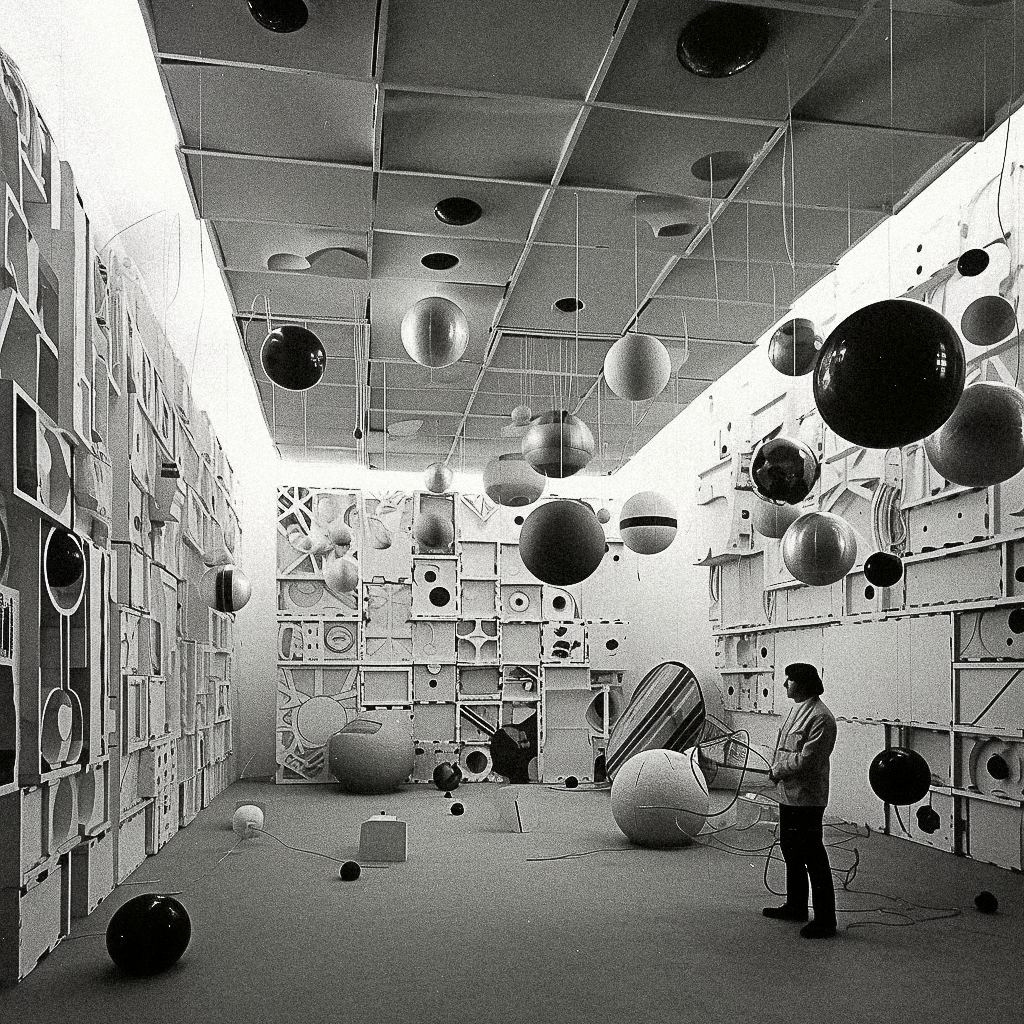
Like all of my Critical AI Art projects, Pierre Lecouille doesn’t exist, except as the output of an AI image generator. But in Lequeu: An Architectural Enigma, Philippe Duboy suggests that Marcel Duchamp fabricated Jean-Jacques Lequeu’s drawings while he worked at the Bibliothèque nationale de France from 1913 to 1914 (Lequeu’s name turns out to be a dig at Duchamp’s arch-nemesis, Le Corbusier, LeQ (“the dick”) to LeC, but also sounds remarkably like L.H.O.O.Q). I had the privilege to see the drawings attributed to Lequeu at the Morgan Library in 2020, right before COVID closed down the city. It was a delight, but it also made me receptive to Duboy’s (otherwise controversial and often-dismissed) thesis. Some of the images seemed much more like something Duchamp would do than anything I could imagine from Lequeu’s era. 

Lequeu/Duchamp demonstrate the construction at the heart of histories, including histories of art and architecture. Historians are storytellers, weaving histories that can be as much fiction as fact. Who really knows if Lequeu’s work was a great deception by Duchamp, or if Duboy’s work was the deception? Historians—and readers of history—create their own meanings and interpretations of history. Thinking of Roland Barthes S/Z for a moment, we might recall his juxtaposition of “readerly” texts that don’t challenge the reader to participate in the creation of a text’s meaning with “writerly” texts that invite readers to actively construct meaning.Lecouille suggests that the history of architecture can be writerly, a way of parrying an architecture history that has grown old and is unable to accept new interpretations (except as dictated by academic politics) as well as counteracting the popular and simplistic use of AI in the architectural academy that envisions creating furry or feathery blobs. Let’s investigate AI image generators for what they are, a glimpse into our collective unconscious. 


About that AI Photography award controversy and a Minor Update on AI Imagery in General

A couple of weeks ago, there was a flurry of news (for example, the Guardian) on how Boris Eldagsen refused the World Photography Organization’s Sony World Photography Award in the Creative Open category that he won for his AI image “The Electrician.” As the Guardian piece notes, Eldagsen’s intent was to question whether the competition would accept AI Art blithely and, prior to being announced as a winner, he made it clear (as his site does) to the competition organizers that the work was AI-generated.

Let’s look at the photograph for a minute. I suppose I shouldn’t reproduce it here without permission (I’ve asked and will add it if I get a positive response). You can view it on the artist’s site which gives an idea of his work in context.

Eldagsen’s description of the series this belongs to, Pseudomnesia, interests me. The term is Greek for pseudo-memory or fake memory, and of course AI imagery is ideal for creating fake memories. In that sense, his work is not unlike my Critical AI Art project, although I would like to know more about the intent behind the specific imagery. The artist explains, “Just as photography replaced painting in the reproduction of reality, AI will replace photography. Don’t be afraid of the future. It will just be more obvious that our mind always created the world that makes it suffer.” Eldagsen is an enthusiast of AI image generation (what he dubs “promptography”) and he argues that it should have a separate category in competitions such as this one.

Questions arise immediately. Were the judges aware it was an AI-generated photograph? If not, why were they judges in a photography competition? The hands are clearly off, with fingernails only appropriate for Joan Crawford, Disney villainesses, and strippers. There is an over-smoothed aspect to parts of the image and then other parts are grainy, giving the image an uncanny-valley feel. The surface damage is strange: one of the scratches appears to be a reflection in framing glass. From a narrative point of view, it doesn’t make much sense. It looks like the woman on the right is getting her clothes adjusted, but why is the other woman cowering behind her? Whose hand is the top right one? Is this last-minute preparations for a wedding or an execution (the image is intended to be in “the visual language of the 1940s”)? Why is it called “the Electrician”? I suppose those enigmas are part of the attraction to the image.

As far as the competition goes, I’ve never heard of it before. The work that they award (reflective of is submitted?) tends to rather boring, the sort of thing found in photography magazines that have lots of product reviews and are read by people who have never heard of New Topographics, but operate websites selling giclée prints. At least there wasn’t much HDR, itself a scourge on the arts. I wonder if the judges were aware that the photograph was generated by Dall-E when they deliberated these works? Possibly not. If they were aware, I’d think they would say so, but in this interview, Eldagsen states “I thanked them later for choosing an AI-generated image and they were all quiet because they did not really want to talk about it.” Again, most of the premiated work isn’t fine art photography, at least nothing I would be interested in, but rather merely technically proficient. What were the criteria for selection? All unclear. Eldagsen neither mentions that he fooled the judges nor that the discovery of this work as AI led to his refusal of the prize, so it’s hard to tell. Nevertheless, his own goal appears to emulate Marcel Duchamp’s submission of a urinal he titled “Fountain” to the 1917 Society of Independent Artists Exhibition and his subsequent resignation from the Society after they refused to acknowledge the urinal as art. Instead of outrage, however, the interview points out the competition’s comic ineptness at communication and publicity management, something which Eldagsen is clearly better at.
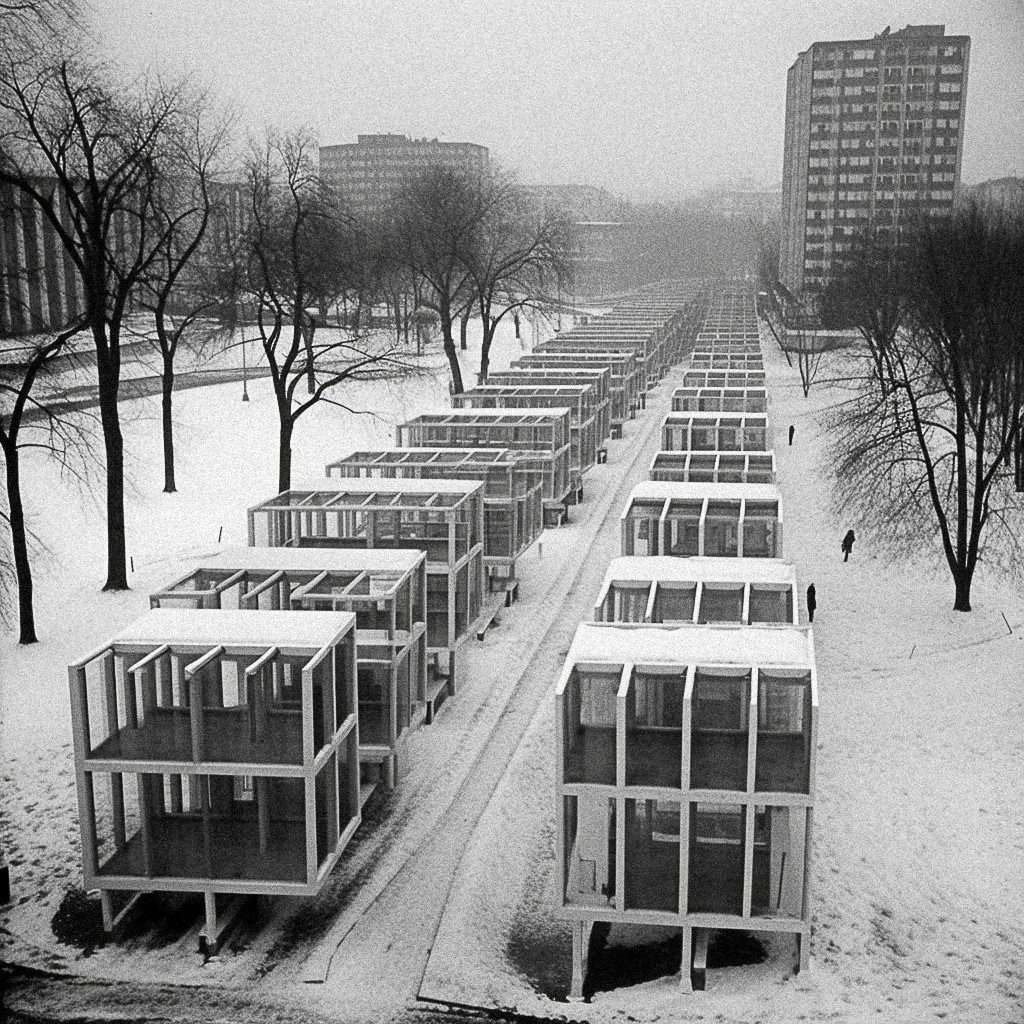
Regarding AI image generation, Eldagsen is correct. There is no stuffing the genie back in the bottle. AI image generators and filters are here and already defining photography and art in general. But when we think about the vast amount of imagery produced by smart phones—much more than with digital cameras—we already do produce most of our imagery via AI, as this blog post from Apple shows. Although the iPhone’s photographic ability is seductive, it is also very much the product of built-in machine learning algorithms and, in trying to achieve an ideal image, permanently sacrifices accuracy for image quality, something Kyle Chayka points out in this article at the New Yorker. The result, for many, is indeed self-inflicted suffering: filters and machine learning algorithms are leading people to experience body dysmorphia and then drawn, in the manner of the Kardashians, to seek needless, disfiguring surgery or suicide (see Elle Hunt’s piece in the Guardian).
Such ruminations quickly get us into the territory of philosophy and cognitive science. Our brains already apply processing to vision, for example in masking the “mini-blackouts” from blinking and apply something akin to a physics-based video stabilization to smooth out movement.
Thinking about AI image processors, I am floored by how fast they have developed during the last year. Eldagsen made his image “in 2022 with early Dall-E,” which is vastly inferior to what can be done with Midjourney 5 these days. Take three examples from summer 2022, when I was exploring a series about a fictional visit to Lithuania by photographer Ralph Eugene Meatyard. All are produced with Dall-E.
While they recall the Lithuanian countyside and Meatyard’s approach, they break down in many places, glitching in ways I quite like. The second image and third images are poorly framed. The landscape in the third image becomes too geometric. The rightmost figure in the third image is microcephalic and perhaps leperous. And so on.

Here are some new examples. I didn’t spend long on them. These are hardly finished in my book. It wouldn’t be hard to take them into Photoshop and get them to match Meatyard’s work better. I may yet do that, as I am pondering a piece on an alternate history of Lithuanian art between 1965 and 1980.

The situation with painting is even more dramatic. Take my Doggerland project.

Much as I love this primitistic image of Cnut VI’s lament made with Dall-E in August of 2022, compare it to either of the images I made last night with Midjourney. Again, I haven’t spent any time with Photoshop or inpainting.

Inpainting would take care of that child crushed under Cnut’s coracle-throne and it could be good to muck up the water and clean up the sky a bit.

Well, ok, so in this painting we see Jesus not Cnut, but still it’s a pretty amazing image overall, nothing that some inpainting can’t cure.

I am now faced with decisions about my Critical AI Art projects. While the Witching Cats and Boxmaker works were done with second generation AI image generation services, Doggerland and the Canals of Vilnius could be revised. I likely will do so, but this means potentially all of these works could require a lot of maintenance as these services upgrade and image generation increases in quality.

Constant upgrades have been the case with photography for some time as well. My current generation of cameras, able to capture at least 40 megapixels and, in the case of my workhorses, the Sony A7RV or Leica M11, over 60mp (not to mention the Fuji GFX100S), now have enough resolution that I can’t imagine needing more. Of course 24mp seemed like plenty just a few years ago when I primarily shot with a Fuji X-Pro2, but prints have been growing in size as a glance at photography shows demonstrates. Big prints mean higher resolution. And, so earlier images need to be upscaled using Topaz Gigapixel AI.

As I’ve stated before, like most photography, most AI image generation is quite bad and seeing images of Emma Watson, Cannabis Goddess of Mars [*]or whatever nonsense users of these image generators produce will discourage the more weak-spirited from exploring their potential. No doubt many artists will re-entrench in traditional media such as painting, sculpture, video, film, or film photography (while my father would have been shocked to hear me call film photography a traditional art form, acrylic paints, which he used, are a century newer than photography). The Right, which barely makes anything that can be considered art, will seek to make “trad” art, while the Left will make angry paintings about identity to provoke them. But those are both rearguard movements. Media are developing more rapidly than any time in my entire life. Artists and critics need to engage AI image generators critically on their own terms, not lament for simpler times.